Showing posts with label trade mark. Show all posts

Monday, 13 April 2020

BONZO DOG and the last men standing principle


Image 1 for trade mark number UK00003129760 The group of trade mark cases on band names was recently added to by the decision of Oliver Morris in BONZO DOG DOO DAH BAND on 30 October 2019 (O-664-19).  There was also a High Court case relying on many of the same issues which was struck out on 8th April 2020 because the IPO decision created an issue estoppel - now the firmly established situation for cancellation actions at the IPO as opposed to opposition decisions.
After sifting through a mass of history from the 1960's Mr Morris held that the residual goodwill in 2005 would have been owned by "the last men standing" (para 105). There were renewed activities beginning in 2006 which had been promoted to some extent by Anglo, the entity that had registered the UK trademark 3129760 shown above in 2015. Where did the goodwill go? Was it new and separable as Anglo contended, or did it continue to accrue to the last men standing. The last men won out and the trade mark was invalidated on a passing off 5(4) ground as well as for bad faith.
Although the band claimed to be a "partnership", it was more akin to an unincorporated association of individuals with no contractual or other arrangements. This followed the finding in the ANIMALS case decided by Mr Hobbs  in September 2013. In this situation of a mere "alliance"the goodwill is left with the last man standing. This principal was elaborated in more depth by Mr Hobbs in CLUB SAIL back in 2010 quoting some of the original band cases (SAXON and THE SUPREMES)
Bonzo Dog Doo-Dah Band in Fenklup (Dutch TV), 7 June 1968. Probably Roger Ruskin Spear or Rodney ("Rhino") Slater This image is from the Beeld en Geluid Wiki
The Band chose not to be legally represented before the Registrar, though they were later in the High Court, after a crowdfunding exercise which billed it as a "criminal case". 

There seems to be something about the music industry that prevents musicians creating either a proper partnership or corporate structure. Although even with a corporate structure, it is still possible for departing band members to reconcile themselves to the fact that by leaving they abandon their interest in the goodwill along with their shareholding.
Maybe today's bands and their promoters are more inclined to take professional advice and register trademarks in an appropriate entity. The cost of doing so is very small compared to the agony of these protracted, evidence heavy and distressing disputes.


Monday, 14 August 2017

India and an Independent trademark system

Tomorrow 15th August, India will be celebrating 70 years of Independence from the United Kingdom. Have a great party.  

For rather less long (since 2013) India has been a party to the Madrid Protocol. Since national applications are subject to such prolonged delays and Madrid permits only 18 months for national offices to report refusals, designating India under the Madrid protocol has been a popular route.

From my perspective, it seems that India has notified refusals in respect of every (?) designation made. When a provisional refusal is notified by the International Bureau to the applicant, only a one month term for response is allowed. Apparently extensions can be obtained but they are discretionary and subject to fees or at least fees from your attorney.

Notifications received by WIPO from the Indian IPO seem to be added to the Madrid monitor and Romarin databases on receipt even though they have not been notified to the applicant formally. If you have a Madrid designation of India, I would strongly recommend you to keep an eye on the real-time status. You can download the refusal as issued by the Indian IPO using Romarin. I'm not sure why it's not possible to see it via the Madrid monitor interface but that seems to be the way it is.

India allocates its own serial number to the application. Using that or the international registration number, you can see what submissions have been made using the Indian IPO trademark search system. This is useful for checking what has been filed and confirming the details of any marks cited in your office action. It frequently seems to turn out that they are expired or are significantly different from the black-and-white representation included in the office action.

You will also need a power of attorney. Simple signatures are acceptable and if you scan the original in colour maybe you won't need to invest in sending the original by courier.

Representatives views seem to differ as to whether as an amendment to the specification to overcome a  citation can be filed with directly with the Indian patent office or must be filed centrally by WIPO using the Form MM6 and paying the associated fee. 

I have also been informed that:

Submissions in respect of IRs designating India have to be made electronically in the dedicated on-line portal of the Indian Trademark Office, after digitally signing documents. However, due to lack of stability of the Trademark Office's on-line system, and regular technical problems, multiple attempts may be required before a successful submission can be made

Since India is likely to be an increasingly important trading partner for the UK after Brexit, good luck in protecting your brands there. If any readers have further suggestions or tips, please comment

Saturday, 26 November 2016

Buying Time for Christmas: a guide for UK Trademark Opponents and Applicants

This is the season when many trademark agents look at their docket and realise that some of those imminent deadlines (and maybe even ones early in the New year) can't possibly be met now that their clients have run off to enjoy the Thanksgiving holiday without providing the material that is needed for their evidence in a UK opposition.

If you read The  Manual of Trade Marks Practice  - the bible of practice published by the UK IPO -  Paragraph 4.9.1 of the Tribunal Section chapter at page 438, you will obtain the impression that extensions are not readily available:
"The timetable is to be adhered to. It provides more than enough time, in the vast majority of cases, for facts or submissions pertinent to the pleaded grounds to be gathered and presented to the Tribunal. Parties should not regard this timetable as a ‘starter for ten’, to be varied at a later date. The Tribunal will, in exceptional cases, consider requests to extend the time allowance. Such requests will need to be fully supported with explanations as to not only what has been done to date but, more particularly, what is left to do and how long it will take to produce the evidence. The Tribunal will also need to be satisfied that the extra time is warranted in the context of the pleaded grounds and what is necessary to determine the case efficiently and fairly."
Therefore a trade mark applicant might reasonably expect things to move along. For the new business applicant this can be necessary, especially if there are investors concerned about a shadowy or real threat of infringement proceedings following on from a successful opposition.

If you read the cases published on extensions you will find this hard line endorsed.

But wait. This is not the full picture.The decisions on extensions that are published are the ones where a refusal of the extension decided the whole case. If the extension is allowed the reasons don't get published. This is an omission that could be rectified if interim hearing decisions were published.

In ZILLION O-193-16 Ann Corbett refused a retrospective extension of time. It was a cancellation action, rather than an opposition and it would have been possible for the case to be re-started. Nevertheless, Ms Corbett held
"Despite the fact that evidence has now been received, and notwithstanding that this may lead to the commencement of another action between the same parties covering essentially the same subject matter (a matter on which the applicant may wish to consider seeking professional advice), I was not persuaded, in the circumstances of this case as set out above, that the requested extension of time should be granted. The request was therefore refused."
Note that these were litigants in person and you, my friend, are more likely to be a professional and know that you regularly get extensions with the flimsiest excuses if the evidence is in by the time of the hearing and there are other grounds so that the case will not close. If you have  a decent reason and can show reasonable efforts you are even likely to get the extension in response to a request without a hearing.

If the UK Registry provides an indication that the extension will be allowed there is absolutely no point in the other party objecting. It will be futile and will simply increase their costs and costs exposure. Never do it. Hearings arise when the UK Hearing Officer is minded not to allow the extension. When the requesting party would prefer the initial indication be maintained they will likely put some effort into preparing for the hearing. The first thing to do is ask your counterpart if they plan to have evidence submitted in time. If they do, back off and forget it. Of course they may deceive you, which is unprofessional, or simply not answer.

If you fail to have the evidence ready for the hearing life can be harder as even a professional representative found in ALOHA  where on 27 April 2016 Heather Harrison refused an extension to an opponent without completed evidence, with this level of reluctance:
Whilst I am satisfied that the reasons in support of the original extension request were sufficient to justify the length of time granted, nothing has been provided to persuade me that the opponent has taken any steps to finalise its evidence in the intervening period. Whether the parties continue to negotiate is clearly a matter of uncertainty. In making my decision, I have kept in mind that an apparent lack of diligence by a party does not mean that an extension cannot be granted. I have also considered Ms Hobbs’s request that I impose a further, final deadline and I have some sympathy for her position. However, in the absence of any information about the current state of the opponent’s evidence, let alone an assurance that it is near completion and will be filed imminently, it would not, in my view, be appropriate to allow the opponent further time
Once again this decision only came to be published because it led to closure of the opposition file.

You should copy the other side and the Manual suggests in bright green letters
"Failure to Copy to the Other Side or to Provide Detailed Reasons Will Result in Refusal of the Extension."
This is also not true, but why risk it.

There are also alternatives to an extension. If there are negotiations or you could initiate some, you might be able to persuade the other side to agree a stay. That has the bonus of not requiring a fee, but you do need consent and you still need to support it with convincing reasons for the request. Turn to page 439 and section 4.9.2 of  The  Manual of Trade Marks Practice  .

So if you need to buy time, remember:
  • your reasons
  • your fee (yes sometimes lazy opponents try to avoid the fee - a retrospective request also costs more)
  • that you do need to have the evidence complete before any hearing
  • it would be helpful to have some non-evidential grounds and a reasonable prospect of being able to start over


Tuesday, 15 July 2014

Trade Mark Roles at CIPA

This tweet caught my eye. When I was young I served on that illustrious committee. It was a long time ago and much of the work was about the 1994 act. It was great fun but I had no idea what we were supposed to be doing.

So let's consider what the role of the trademark committee should be. It might be to impose its members views on UK trademark policy and influence the IPO accordingly. That doesn't quite sound right does it (but its probably true).

If we look at its latest report in the CIPA journal for June 2014 We find a brief report that suggests that they were interested in plain packaging, goods in transit and not at all interested in the trademark fast-track consultation. Not much inkling on the CIPA policies on these issues might be though. [The Duck notices that the same journal contains a report suggesting that trademarks are outside our comfort zone]

It was CIPA who took forward the IP TRANSLATOR case which has led to real changes in trademark law and practice which are of undoubted benefit to business. This is because a specification that means what it says can be understood by a business man. That was very much seen as a personal campaign of Richard Ashmead's (now a SOLO too). Nevertheless, it gives some indication of what CIPA might adopt as a trademark objective.

Trademarks are a very substantial part of intellectual property practice, so much so that agents have their own institute ITMA which duplicates much of the work that CIPA could be doing. This suggests that CIPA should have a clear objective so that it can work in a way that complements its sister organisation and avoids duplication of effort. Our members are all patent attorneys so when we get involved in trademark practice it is more likely to begin with  technically based businesses rather than fast-moving consumer goods and fashion (though once we become expert there is generally no stopping us). Therefore, could the trademark committee of CIPA focus on collection of evidence on those types of businesses in order to present opinions to legislators, OHIM and the IPO?

In my day the trademark committee also had a role in organising seminars and disseminating information on recent developments, but that seems to have been split off.

We have reports of trademark decisions that appear in the journal. These also seem to be purely objective and outside the scope of the committee.

CIPA also collects royalties on the widely unread,scantily publicised and far too expensive Trademark HandBook the production of which is also outside the scope of the committee.

So what does this leave for the committee to do. Should it be reactive and only respond to consultations or should it have an agenda. Maybe its first priority should be to update its page on the CIPA website

Sunday, 29 June 2014

Cateys 2014 :: the Brand at Work

This week Filemot will be attending the Catey Awards - an event to honour those who work in the
Hospitality Industry.

Of late the Hospitality Industry has provided an increasing number of clients to the intellectual property world as the importance of branding to a once- local business activity has become apparent.

One of the biggest issues is "own name" ownership and none fell as hard as CIPRIANI. Thus was a very protracted dispute between the famous (so it was decided) Hotel Cipriani in Venice and the would be Cipriani London in Grosvenor Street that was not even  entitled to promote the line that it was "managed by Guiseppe Cipriani" even though it was true. This last fall came in a decision of 29 January 2013 that references the earlier history and explains why DOWNTOWN MAYFAIR is no more.

Today it is the chefs that do business under their own names and hopefully that will continue to mean the chef of  that name is behind the stove or at least has seen it.   Its good to see that amongst this year's nominees who trade on their name Sat Bains has his business logo registered in his own name.
Andrew Fairlie has at least not permitted anyone else to register his name.

While Cipriani's reputation arose from trade outside the UK, it is usually closer proximity that leads to problems. Even so The IVY in London managed to suppress competition in Glasgow. See the story from January 2013 here and Scotland may yet be another country.

Closer still the Bocabar  in Bristol  had a dispute with  its local neighbour Boca Bistro Café now re-christened Bica Bistro Café. They settled their dispute in October 2013  in passing off in the Intellectual Property Enterprise Court a rather more economical forum than the High Court in which Cipriani played and lost thousands if not millions to their lawyers. Even so this Bristol victor suffered criticism over the costs in a December 2013 decision since they had pursued the matter to trial after the name had been changed and the major issue left was costs. As a result the costs awarded were just £10,750 a rather modest sum relative to the actual costs incurred. History does not relate whether there was an enquiry as to damages. However in the final order Bocabar were required to provide supporting evidence for any enquiry "showing that the financial sums proposed to be recovered justify such a procedure." The moral of that tale is that brand owners should be happy to get a result and then lay off their lawyers fast.

The BOCA case also illustrates that it is not enough to register your trademark if its use is going to amount to passing off. The Cafe did have a trade mark registration which was declared invalid in the 2013 judgement but oddly still appears on the register. Nevertheless for all in the hospitality industry having any brand that will be significantly promoted registered is a very worthwhile investment as the costs of dealing with a problem using a registered trade mark are far less than the hurdles of proving a case in passing off and the cost of registering a trademark is modest.

Certainly the house of Filemot is anxious to keep its hospitality clients well away from the courts and costs awards. Awards such as the Cateys are much more welcome.

In the naming of restaurants originality and design is well-rewarded and its good to see that one of the Catey sponsors is  the Jersey design house The Idea Works

.

Friday, 21 March 2014

Sally Cooper reaches for her colouring book

NewClient Limited (“NC”) provides a new logo which involves a creative intertwining of the letters “N” and “C” imposed on a fictional flower. I see the flower as a combination of a buttercup (the head) and a rose (the stem). To hide my horticultural ignorance, I comment on the fact that four logos are provided – a first in orange, a second in green, a third in blue and a fourth in red. 

I am told that the new logo has been created in-house by NC’s (employed) design team and the
concept involves use of a different colour in the context of each different business activity. I am also told that NC will operate only in the UK in the near future, and all business is “sporting and cultural”.

The copyright symbol – (c) copyright NewClient Limited 2014 – is attached to materials provided
(none of which have yet been released to the public), and the budget for doing anything further is (very) limited.

I am asked about “Trade Mark Registration” and “DesignRegistration” which NC has read about on the website of the Intellectual Property office at www.ipo.gov.uk.

Particularly, I am asked about registration and colour : I do my best. Key parts of the letter I draft for sending to NC are as follows :
DRAFT BEGINS :
Dear NC
Amongst the issues under discussion are (1) the costs of filing either a Trade Mark Application or a Design Application, and (2) rights arising to the owner of a Trade Mark Registration (under the Trade Marks Act 1994) or to the owner of a Design Registration (under the Registered Designs Act 1949 (as amended). In turn :
1) Application Costs :
 a) Trade Mark Application :
    In order to concentrate on issues of colour, assumptions made are (a) that the Application will be for services in a single Class (viz: Class 41) and (b) that payment of official fees with not be made at time of filing (so no discount of £ 30).    The UK Trade Marks Registry will accept a series of two marks for its basic fee of £ 200.    So NC could apply for its new logo without colour (version in “black-and-white”) and, for that same basic fee of £ 200, add (say) the logo in orange as a second mark.    If NC takes the view that this gives undue importance to the logo in orange, it becomes relevant that the Registry requires an official fee of £ 50 for each additional mark in a series.
    To take account of its view, NC might apply either (a)  for one mark being  the new logo without colour (version in “black-and-white”) (basic fee of £ 200), or (b) for a series of five marks (logos in “black-and-white” / orange / green / blue / red) which attracts an additional official fee of  £ 150
(so £ 350 in total).
b) Design Application :
 The UK Designs Registry will accept two-dimensional designs (“Business logos”) in Class 99 (“Miscellaneous”). It has a basic fee of £ 60 for a first design, and £ 40 for each design thereafter. 
Hence, NC might apply only for its logo without colour (“monochrome”) for the basic fee of £ 60, or it might file for five logos (“monochrome” / orange / green / blue / red) at a total cost in official fees of £220. [ An assumption is made in the case of all fees that publication will not be delayed ].
2) Rights arising  : 
a) Trade Marks Act 1994
“The relevance of colour to a mark registered in black-and-white but used extensively in a particular colour or colours” is the title of a recent Notice issued by the Trade Marks Registry [ TPN 1/2014 ].
The background is a case decided by the Court of Justice of the European Union [ CJEU ] which concerned a mark which had been registered only in black-and-white, but which had, in fact been used extensively in colour  [ Case C-252/12 Specsavers  International Healthcase and Others v AsdaStores Limited ].
The Registry’s Notice brings good news that “use of colour may be taken into account as a relevant factor when considering the likelihood of confusion, detriment or unfair advantage being taken of the registered black-and-white mark” [ paragraph 3 ]
But the Registry also gives a warning : “the CJEU’s judgment does NOT (and NOT  is emphasised by the Registry) mean that colour should be taken into account where the [the owner’s registered trade mark ] has been registered in black-and-white but either (i) has not been used, or (ii) has been used in colour(s) but the extent and consistency of such use is not such that the colour(s) formed part of the distinctive character of [ the owner’s registered trade mark ] .... In these circumstances, colour will be regarded as irrelevant”.
b) Registered Design Rights 1949 (as amended)
The Court of Appeal in the United Kingdom gave its judgement in the case of Magnetic Ltd v PMS International Ltd on 28th February 2014
The Court looked at the record of a three-dimensional article where representations on file did not include any colour and (Lord Justice Kitchin) said “it is striking that the various representations are shown in monochrome, and so it must be concluded that this design is not limited to particular colours”  [ paragraph 42 ] (this time, the emphasis added is mine).
DRAFT ENDS
I have put this draft letter to one side whilst I ponder the question : is it really the case that black-and-white / monochrome logos on the Designs Register now enjoy broader protection than black-and-white / monochrome logos on the Trade Marks Register ?

Answers to the Comment box !

Monday, 3 March 2014

Trademark Law in China Update from Sally Cooper via Leeds to HK


May Day happens each year on 1st May and (per Wikipedia) is “an ancient Northern Hemisphere spring festival.” Leeds is a city with a number of road markings that read “XING AHEAD”.
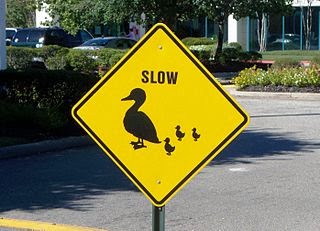
Here is duck xing sign
I was not expecting the two to come together as I travelled today to the Leeds office of Walker Morris – but they did.

The XING connection is that it “looks Chinese” whereas the real thing is Tingxi Huo of CHOFN (website at www.chofn.com) who delivered a number of formidable thoughts on Trademarks In China.

And 1st May is what we Brits call a “commencement date” : there will be new trade mark rules in place in China just before INTA gathers in Hong Kong in May 2014 !

This small report concerns only four matters that were of particular interest :

1) Translation : Our speaker explained that translation into Chinese characters might be (a) conceptual – so the translation of APPLE (the business) equates to “apple” the fruit, or (b) phonetic – and ADIDAS was given as an example of this, or (c) mixed – so (it seems) STARBUCK combines the characters for STAR (concept)and BUCKS (phonetic). And you can change ! It appears that LEXUS until June 2004 relied on a “conceptual” name – but when Chinese people (even English-speaking Chinese people returning from long-term visits to Europe) failed to link the LEXUS brand with its “conceptual” name in Chinese characters – the company changed to LEXUS in “phonetic” characters. Additional to this were (a) comment on “non-official” names or “nicknames” being used by Chinese-speakers (and the desirability of the brand-owner registering these names as trade marks), and (b) the importance of translating into Chinese characters in relation to goods-for-sale not only the brand-name but also supporting materials (such as labels and manuals).

2) The ® symbol : In China, this means “Registered in China” and Chinese Customs Officers police both incoming and outgoing infringement (emphasis supplied). In consequence : (a) if you intend to export goods from (say) the UK to China (and you have a trade mark registered in the UK or EU so it’s your practice to attach the ® symbol) then remove (or change to TM) so as not to attract the attention of Customs when goods arrive at port-of-entry in China, and (b) if you intend to have goods manufactured in China but don’t have a trade mark registered in China for those goods, then wise counsel is to search (the Register in China) before going ahead with an order for manufacture (and, in any event, be sure not to attach ® to such goods manufactured in China !)

3) Time limits : China became a Member of the World Trade Organisation in 2001 and 1st May 2014 is the date when time limits come into force for dealing with Trade Mark Applications (and for appeals). For example, there will be a time limit of 9 months for dealing with a new Application and a time limit of 12 months for dealing with an Opposition. For the first of these – our speaker made reference to the International system – filing locally in China will attract the 9-month time limit whereas the International system brings with it a time limit of 18 months. For the second of these – “special circumstances” will justify an extension of 6 months (so we wait to see what “special circumstances” will justify dealing with an Opposition in 18 months rather than 12 months).

4) (State) Administration For Industry And Commerce : this entity has 500,000 employees and it has teeth ! If presented with “clear-cut evidence” it will act quickly and effectively. It will not provide a brand-owner with damages, but it will initiate investigates / issue orders to cease infringement / confiscate (and destroy) infringing goods and tools / impose (significant) fines.

I travelled away from Leeds and Walker Morris and Tingxi Huo grateful that I’d learned something of the “similarities” between our systems in the UK / EU and those that will be in place in China after 1st May 2014. Now for INTA !

Tuesday, 18 February 2014

and NOW for something completely similar - by Sally Cooper


Time passes by – days and weeks and months and years come and go – and Trade Mark practitioners in the UK tussle with section 5(2)(b) Trade Marks Act 1994 where it says
“A trade mark shall not be registered if because it is similar to an earlier trade mark and is to be registered for goods or services identical with or similar to those for which the earlier trade mark is protected, there exists a likelihood of confusion on the part of the public”. 

And where the first part of an earlier trade mark is (visually or aurally or conceptually) the same as the first part of the mark applied for, thoughts of the consumer and “imperfect recollection” come to mind and – particularly if goods are identical – there is concern the applicant will fail in its quest for registration.

So finding a case where an opponent succeeds on (visual and aural and conceptual) similarity, but fails on likelihood of confusion brings joy to the heart. The case in question is O-069-14 of 10th February 2014 being an Opposition by Now Wireless Ltd against a mark applied for by Nowcomm Limited.

This note is limited to matters set out at pages 20 / 21 (paragraphs 53 / 58) : in these two pages Mr Martin Boyle as Hearing Officer for the Registry sets out the two marks. He then expresses his considered views on similarity of marks which (in summary) are :
  • “There is not more an average degree of visual similarity” and 
  • “There is not more than a low degree of aural similarity” and 
  • “There is a reasonable degree of overall conceptual similarity”. 

But joy comes with the findings that follow :

“I have found that none of the component parts of either mark are inherently distinctive, and that NOW is not markedly dominant in either case. I have found the earlier mark to be of low distinctiveness (though I bear in mind that weak distinctive character of an earlier mark does not preclude a likelihood of confusion) and even if I am wrong about that, the element NOW alone has not acquired a distinctive character as a result of the use of NOWWIRELESS. I have found an average degree of visual similarity, a low degree of aural similarity and a reasonable degree of conceptual similarity between the marks. I have found the goods and services of both specifications are largely aimed at professional business users. Even when bought by individuals they will be considered purchases. There will be a considerable bespoke element to many of the services and the requirement of technical suitability for intended use will mean they will be bought after technical discussions to ensure they are fit for purpose. In the light of this, even bearing in mind that I have found goods and services to be identical, I do not find that there is a likelihood of confusion (emphasis supplied)”.

The applicant applied to register its mark in July 2007 and opposition was filed in October 2008 : (to its credit) the UK Registry pressed on to its Decision notwithstanding that the earlier mark on which the opponent was able to rely was its CTM Application 4650156 filed in 2005 and which is the subject of two (suspended) oppositions. Time passes by – and we wait to see whether the opponent will appeal !

The Duck points out that its not possible to declare an earlier mark invalid in opposition proceedings but it does seem that the applicant drew attention to Arnold J's decision of NOW invalidity in the fight between EMI and Starbucks. Since that decision was upheld by the Court of Appeal the remaining distinctive character in both these marks is their choice of a companion term and since those are different the opposition was rightly doomed. Now can we move on to wonder if Now is the 73rd most common word in the English language to wonder where com comes.

Friday, 29 November 2013

Scotland's Brave New IP by Sally Cooper


SCOTLAND’S FUTURE – YOUR GUIDE TO AN INDEPENDENT SCOTLAND is is a title that’s descriptive (rather than distinctive) but it may well attract more readers than (say) ASPIRATIONS FOR SCOTLAND IF THERE’S A “YES” VOTE ON 18 SEPTEMBER 2014.

This writer’s regular work involves discussing with (very small) businesses the key matters of (a) the name they might want to adopt for a new company, and (b) the availability (or otherwise) of Domain names, and (c) the availability (or otherwise) of trade marks.

Also, this writer regularly spends time in Cumbria - where legal work leaving the county might go north (maybe Glasgow or Edinburgh) rather than south. Hence, whilst 24 March 2016 (proposed for “Scottish Independence Day” if there’s a “YES” vote) is comfortably in the future, it’s appropriate to find time to scan SCOTLAND’S FUTURE for clues on possible new regimes for (a) company names, and (b) Domain Names, and (c) trade marks.

The Scotland Act 1998 lists “reserved matters” (being matters on which the Scottish Parliament cannot legislate) but, as SCOTLAND’S FUTURE points out, there’s no parallel list of “devolved matters”. A list is provided (viz : matters on which the present Scottish Parliament can legislate) and this includes :
  • the creation, operation, regulation and dissolution of types of business association
  • intellectual property.

Which this writer reads as saying that the present Scottish Parliament could, if it so wished, set up a Scottish Companies House (governed by local law) or a Scottish Trade Marks Registry (governed by local law) immediately - no need to wait for a “YES” vote and Scottish Independence Day ? Answers in the Comment box please !

SCOTLAND’S FUTURE refers to the new .scot Domain Name applied for by the Dot Scot Registry Limited (a not-for-profit company) which has an estimated launch date in 2015 - after 18 September 2014 but before the date proposed for Scottish Independence Day if there’s a “YES” vote.

Thereafter, hard facts are hard to find.

The press has reported widely both (i) Scotland’s aspiration for transition to independent membership of the European Union, and (ii) Scotland’s aspiration to succeed to international treaties. In the latter context, SCOTLAND’S FUTURE identifies the World Trade Organisation (WIPO) as one of the multi-national organisations in which an independent Scotland will participate.

Further, a passage headed “Intellectual Property” begins with “We will ensure continuity of the legal framework for protecting intellectual property rights” then continues (rather rudely) with “Independence will allow Scotland to offer a simpler and cheaper, more business-friendly model than the current UK system, which is bureaucratic and expensive, especially for small firms”. These same points are made in Questions / Answers which include the grandiose promise that “Scotland will meet [European Union] regulations and directives on IP rights protection, as well as international patent and trademark (sic) protections”.

Otherwise, there are tantalising hints :
  • “We might decide to continue to share some services with the UK, at least for a transitional period” : do we infer (contrary to my reading of the Scotland Act 1998 noted above) that both Companies House and the Trade Marks Registry will remain available to businesses in Scotland for the foreseeable future ?
  •  “Question : Would companies based in an independent Scotland still be able to float on the London stock exchange ? Answer : Yes …… around 2,500 companies from over 70 jurisdictions are listed on the London Stock Exchange” : do we infer that an independent Scotland will create its own company law and so increase the number of such jurisdictions ?
  • “Question : When consumers are harmed, will there be systems in place to help them ? Answer : Yes. We propose …… a more efficient model of trading standards …… “ : maybe good news for brand-owners ?
The website at www.scotreferendum.com suggests comments and questions are sent to referendum2014@scot.gov.uk. But this writer won’t be commenting or questioning as she’s no wish to add to the figure of £ 13,700,000 which is the estimated cost of the referendum !

Thursday, 12 September 2013

How Many Conversions are There?

The reinvigorated blog today has a guest post from distinguished Northern Trade Mark Attorney, Sally Cooper who has been pondering Conversions:


   We are not talking about currency conversions or faith-to-faith conversions or even kicks-that-score-three-points in the game of rugby union.

   No – the concern is Article 108 of the Community Trade Mark Regulation ("CTMR") which begins " The applicant for or proprietor of a Community trade mark may request the conversion of his Community trade mark application or Community trade mark into a national trade mark application …… ".

   Linked to this are :

(1) Article 109(2) CTMR which sets out " If the Community trade mark application has been published, receipt of any such request shall be recorded in the Register of Community trade marks and the request for conversion shall be published " and

(2) (in the UK) Regulation 10(2) of the Community Trade Mark Regulations 2006 [SI2006/1027] …… which sets out : " … where the request [for conversion] has been transmitted [by OHIM] it shall be treated as an application for registration of a trade mark under the [Trade Marks Act 1994] " which brings into play section 38(1) Trade Marks Act 1994 : " when application for registration has been accepted, the registrar shall cause the application to be published in the prescribed manner ".

   This writer has come across two instances of conversions being recorded on the OHIM Register and on the UK Register :

(1) EU Trade Mark Application 8321382 has a filing date of 26th May 2009 : the record notes " Application withdrawn " and " Conversion " with only the UK as country designated : the mark went on to become  UK Trade Mark Registration 2559508 which has a filing date of 26th May 2009 (corresponding to date on the OHIM Register) and a section noting " Converted trade mark details "

(2) EU Trade Mark Application 7414361 has a filing date of 24th November 2008 : the record notes " Application refused " and " Conversion " with designations of Cyprus, Denmark, France, UK, Greece and Ireland : the mark went on to become UK Trade Mark Registration 2574526 with a filing date of 24th November 2008 (corresponding to date on OHIM Register) and a section noting " Converted trade mark details ".

  This writer has not come across either :

(1) any co-ordinated information provided by OHIM which sets out (for example) :

(a) the number of conversion requests received in any year

(b) whether those requests were received before or after publication of the mark by OHIM

(c) whether the requests for conversion came from Private Applicants or from Representatives

(d) whether fees of OHIM were paid and conversion requests were then transmitted to designated countries

(d) whether registration was achieved in designated countries thereafter, or

(2) any co-ordinated information provided by the UK Registry which sets out (for example)

(a) the number of conversion requests transmitted by OHIM in any year

(b) whether the (now local) Applications achieved publication

(c) whether the (now local) Applications achieved registration

(d) whether any reports have been made to OHIM regarding (b) and (c).

  A recital in the 1988 Directive (to approximate the laws of Member States relating to trade marks) says " Whereas in order to reduce the total number of trade marks registered and protected in the Community and, consequently, the number of conflicts which arise, it is essential to require that registered trade marks must actually be used " (emphasis supplied).

  The availability of " request(s) for conversion " played a major role in OHIM's promotion of the " new " Community Trade Mark system in the 1990s. The fact that such requests might actually increase the " total number of trade marks registered and protected in the Community and, consequently, the number of conflicts which arise " was not greatly considered – probably because, until its doors opened for business in 1996, the Community Trade Mark system had no idea how many Applications it would receive.

  Now seventeen years have passed by, perhaps there should be an interest in whether the availability of " request(s) for conversion " has, in fact increased the " total number of trade marks registered and protected in the Community and, consequently, the number of conflicts which arise " ? And perhaps it's time for OHIM and local Registries (including the UK Registry) to provide some numbers ?  

Sunday, 9 June 2013

A visit to London from Alicante: OHIM British Day Postcard

Westminster Abbey on 5 June 2013 with commonwealth flags
The flags were still flying outside Westminster Abbey in honour of the 60th anniversary of the Coronation as members of the UK profession gathered to meet OHIM and UK officials  at 1 Victoria Street ( the well-appointed BIS Westminster Conference center)   nearby to share the hospitality of OHIM at OHIM British Day. We were honoured by the presence of President, António Campinos as well as the exuberant Inge Buffalo and Dimitros Botos. On the UK side John Alty as Comptroller was there with Sean Dennehey who is now responsible for both patent and trade mark operations within the UK office. It seems that a visit with the Minister may have been responsible for the delayed start and late arrival of the leaders.

Now that the UK IPO and OHIM are using the same IT engine (in the UK its called TM10)  for managing their trade mark databases, can we expect even greater convergence? 
OHIM continues to emphasise timeliness as the core of its Quality metric and there is no doubt that, in some areas, it is impressive with designs being registered within a matter of hours. I did take the opportunity to express concern that the Board of Appeals and subsequent appeals were often not timely at all and where this resulted in enforcement delays as with cancellation actions, that was not the quality brand owners needed. However that was perhaps the only *meanness* (their word) shown to the OHIM delegation at least in the public morning session. I cannot say whether the private afternoon session with ITMA and other representatives of the interests was more contentious.

It seems there will be a new OHIM website going live at the end of the year. Its services will be piloted with the biggest users - so not you and me. I spoke to two representatives of said biggest users over the lavish refreshments and learned that despite the volume of business they do with OHIM they do not yet use MyPage. Maybe they need to take some consultancy from solos like us on how to be efficient in a paperless way.

We heard about the tools being created under the Co-operation Fund  programme under the auspices of the European Trademarks and Design Network (ETDN) .That link will take you to their new page and the interesting tools they are working on. Some like the similarity tool you can play with and there are plans to integrate them with the mainstream in due course. Classification and its convergence has attracted a lot of post IP TRANSLATOR interest, not all of it now hostile. There seems to be a new recognition that clarity of specifications without the wild land grabs made possible by class headings in three classes is desirable. Nevertheless the imperatives of translation have led to an assessment that only 11 sub parts of the WIPO class headings are in fact insufficiently clear leaving 186 phrases you can use following a report made in May 2013. Meanwhile, if you need real IP translating the translate button in Euroclass now renamed TMClass as it is not limited to Europe, works miracles of high quality translation of specification terms useful for your global portfolio.

The Observatory also had its own presentation and is set to become an important policy setter. Its principle immediate objective is to complete research on mapping the landscape of IP enforcement  and that means understanding citizens' perceptions of it and they do mean copyright as well as patents and trade marks. The US has reported that 27.7% of jobs are IP related and 34.8% of US GDP is IP related. We should soon have comparable figures for Europe and they are not expected to be uniform across the region. Once we know, expect to see IP campaigns coming to a cinema screen near you. The IP toolkit will give you an idea of the messages you are likely to hear.

OHIM intend to *Keep Walking* towards a more efficient future and we hope to be by their side in this journey which we all hope will benefit European jobs and economies.


Thursday, 21 February 2013

UK Trademark Searching

As part of their systems upgrade, that was revealed on 11 February, the UK IPO provided a new trade mark search interface .  It is still listed as find by word or image but there are some important developments that make it a whole lot more useful than the previous version. The biggest, and most significant for unrepresented trademark applicants as well as agents seeking to do economical clearance searches, is that there is a new option to search for 'similar' marks. This is now the default and you may be surprised to find that you get pages of hits when you were expecting just a few from an identical word mark search. You can revert to Exact word or Begins with if you are looking for something specific. However the new option ensures you don't miss the vowel changes. There is no information about the particular fuzzy algorithm they are using but it survived my tests, so I am impressed.

You do hit the buffers, though, if your search wants to deliver more than a 1000 hits.

I did a search for FORTY TWO and got 7 hits but 42 gave me 979 but then that's the meaning of life isn't it?

Another change is that instead of offering you spaces for several words that you could AND or OR together, you can type in a bunch of words and choose to have the search for all of them or any of them.

The search will retrieve you any mark protected in the UK and community trademarks and Madrid registrations are displayed in a new format. There is no link direct to CTM online or Romarin, which is frustrating especially when your CTM hit comes up with a status of OPPOSED very tantalising that.

Have fun