Showing posts with label CIPA. Show all posts

Saturday, 25 February 2017

CIPA consultation on CPD

CIPA Education Committee have produced a document which is fulsomely described as a Framework for Professional Development. They want our comments on it by 10 March 2017 so do jump to it - they clearly need help. I had hoped it was going to propose the end of the CPD hours culture in favour of results, but no.

The idea seems to be that they need to know what a qualified patent agent needs to learn in order to develop and maintain his professional competence. This will guide the educational provision.

Once one has got over the "Teach Speak Jargon", we find that they believe we need to have skills, knowledge, values and behaviours. I accept that skills and knowledge can be learned taught and developed, but I am not too sure about the last two. Once upon a time lawyers studied ethics which generally dealt with the practicalities of not acting for both sides in an argument and managing the clients funds but such practical issues don't seem to be within the scope of this framework. Least said about "behaviours" the better.

Let me turn to what I do understand. There are lists of skills and lists of knowledge.

At the end of the list on knowledge we have:
2(g) a member should have a sound understanding of the law and practice as it relates to designs, trade marks, copyright, licensing, due diligence, contract and competition law to enable them to identify the implications of such laws and practice for clients and to enable them to refer clients for further professional advice and guidance as relevant and appropriate
Frankly this narrow focus on patent practice is disappointing. Now that CITMA has its charter are we dropping our interest in the core intellectual property fields of trademarks, designs and copyright? I think we need to put Mr Ferrara right.

The list of skills is extremely flowery. Some are the basic drafting skills that are a prerequisite for qualification. Other so-called skills are frankly patronising : do you want to be trained in how to "be able to adapt style and approach to meet the needs of clients".  One skill that seems to be particularly important is managing the expectations of clients who expect their unadapted applications to be examined any time soon by the EPO or UK IPO.

This list does not provide any suitable structure for developing educational offerings.

When seeking education, focusing on knowledge always helps. The core of the CIPA offering needs to be keeping up to date with developments in IP law in our home jurisdictions. The suggestion that the same level of emphasis needs to be placed on ALL overseas jurisdictions is odd. Its all too easy for CIPA to succumb to visiting overseas' professionals desire to give "marketing" updates in the name of education. Education in the laws and practices of the main trading partners of this country is what we need. We need to direct our eager marketing volunteers into discussing practical issues that are likely to be relevant to our local clients.

Item 2(f) : approaches to competitor IP is not knowledge -its a skill.

The values and behaviours are the province of IPREG and codes of conduct.

An educational framework needs to be more skeletal and be a tool that those organising programmes and events can work with. This framework does not seem likely to help.

We need courses and support on:
  • keeping up to date on IP law
  • improving  skills of drafting and advocacy for preempting and responding to office actions
  • developing litigation skills
  • listening and receiving feedback from users of IP on what they need
  • managing our own businesses - includes ethics
What do you think you need CIPA to provide for you?


Tuesday, 28 July 2015

Access to Justice Pro-Bono- the Beavis Way

A few days ago (21 -23 July 2015) three days of Supreme Court time were occupied discussing
whether an £85 fine for overstaying in a car park was an unenforceable penalty (which is an important point for all who enter into contracts) or merely unfair under the Unfair Terms in Consumer Contracts Regulations 1999/2083. Those with enough broadband in time can listen to the full argument here.

The Law Society Gazette reported the case here  and it has attracted a great deal of attention from those who comment. Many are concerned about parking, but some are interested in how one deals with unconscionable bargains in the wider world.  The earlier article from the Gazette is here. This discusses the legal issues in more detail. For the answers we will need to wait for the judgement. Even patent and trademark agents are aware of some obvious unconscionable bargains amongst the scam invoices and renewal services offered to their clients unsolicited. Such scammers, though, seldom try to enforce their contracts in the courts like parking contractors do.

Funding the Case

 Mr Beavis, who is said by The Independent to be the owner of the Happy Haddock in Billericay  was fortunate in being able to raise money for an issue that sparked the public interest of motorists at least, by means of a crowd funding appeal. He is not at risk of costs because this was only a "small claim" and he has paid the £85 penalty. Parking operators business models are however in jeopardy. Many other extortionate contracts might also suffer if the Supreme Court decides in favour of Mr Beavis. It should be noted that neither the original judge nor the Court of Appeal were sympathetic to his plight. Even if the Supreme Court decides £85 wasn't unconscionable, it may set guidelines that will keep figures more confined in future contracts.

What if your intellectual property problem does not capture the public imagination like Mr Beavis's car park fine? How will you will obtain economic access to justice if you feel you can't afford to defend your IP or defend a claim that you are guilty of IP infringement? You can become a litigant in person. However, a company does need to be represented. The Chartered Institute of Patent Attorneys now has a working group on pro bono services and if you are interested watch out for an announcement in the CIPA Journal. Meanwhile, your best bet is to work on a pitch for why your case deserves the unpaid help of a professional.

Friday, 3 July 2015

CIPA as an Entity of Intellectual Property Influence

The Chartered Institute of Patent Agents is holding a web cast of a meting at 16:00 on July 8th to discuss updating its Bye Laws.

The impetus was the need to modernise the admission regulations which, due to the demise of the OGM, were slowing up the admission of new members. However the opportunity was also taken to review the types of members we admit.

The 25 page report of the Bye-Laws working group can be downloaded here .

Membership Structure

The core of CIPA is practising patent agents and at present you can become a FELLOW as soon as you qualify. This means there is no progression or recognition of seniority within the profession after that. Even so the working group is not considering adding another illustrious lawyer for rich senior partners - an opportunity lost. ITMA is smarter than that.

To be a body of influence, it seems to me we need a wide and large membership. Clearly CIPA has most to offer to those who want to practise as pure patent agents but other Intellectual Property Rights and Patent Litigation are very important too. At the moment Barristers and other Litigators are excluded from the Fellowship and this is a loss to CIPA's influence. If our industrial members want clout on issues such as the Unified Patent Court we need to recognise the central function of those who do litigate. We cannot suggest they join as "Affiliates". Its clearly not very attractive as only 35 have apparently done so. If you are a QC at the patent bar you should be a Senior Fellow. If you are a patent solicitor working on High Court litigation Fellowship is the minimum respectable rank.

Creating a more inclusive structure will also make a more attractive career path and a broader pool to make effective policy considerations. At present CIPA is stuck in securing patent rights and its scope stops there. It needs to recognise that its members work in the wider world where those patent portfolios influence share prices, business success and failure, disputes, licensing and much more. There is only so far Ministers are likely to listen to people who only seem fit to fill in forms.

There should also be Trade Mark Fellows and please can we get rid of the divisive Overseas members. If you are an EPA resident anywhere you can surely join as an EPA member (and why not a Fellow) and if you are a US patent lawyer then are you really so different from a UK one. Can we make it even simpler.

Titles

There is a proposal that the 288 members who are on both registers could call themselves Chartered Patent and Trade Mark Attorney. I am saddened that I am one of so few. Surely many more folk within patent firms practise trademarks. It seems that very few can now manage the labour/cost of both Trademark exams and  Patent exams. Again we are narrowing our specialism so that influence can be ignored. We need to facilitate not limit the acquisition of a broad range of skills by our members and give them the opportunity to move between practises that provide a range of services.

The title PATENT AGENT is about being on the register and therefore now outside the gift of CIPA. Lets not worry about titles nobody uses them but we do say in our CVs what exams we have passed, what qualifications we enjoy and what influential professional bodies we are proud to belong to.

Committees

An interesting proposal is the empowerment of committees to act without the approval of Council in respect of delegated powers. A lot of policy is decided by committees so we might be losing control here. However getting fast responses to consultations does requiresome delegation. The Council members on Committees might need to be more accountable to Council and everyone should be more accountable to the membership.

Elections

Not much changes here. Is this an opportunity lost. Elections need to be a bit more inclusive. Maybe we should have constituencies to be represented. At present the influence of the Council is being suborned to big business who use the patent system for one purpose. Council needs to represent a cross section of membership and we need to have SOLO members and not too many retired ones, as well as EPA ones . Therefore I foresee a need to amend 11.1 so that it is not just Fellows who can be on Council.

Do attend the webinar and ask questions. We need your Influence. 


Sunday, 28 June 2015

Blogging Suspension: Please help me get Twitter rights back

There are a number of topics I had hoped to blog about. These include:
  • The expansion of the Hague International Design system so that it now allows our clients to secure design protection at OHIM and in the USA and perhaps less significantly Japan
  • The changes to CIPA bye-laws which will be the subject of a webinar on July 8 from CIPA Hall. If you are a member you can book here
  • The Unified Patent Court fees consultation and what it means for more modest patent holders and the patent strategies start ups should follow as a result of their potential exclusion from the new court.
  • Progress on the introduction of a grace period for UK patent applicants by the UK-IPO
  • The delightful free speech by Judge Alex Koszinski at the 2015 Sir Hugh Laddie lecture on 24 June 2015 at UCL. Peter Groves has blogged about it here. 
I have not blogged about these important issues because I cannot draw attention to my blog posts any longer on Twitter. This blog is blacklisted as spam and links to it cannot be tweeted. I have reported it and this is the feedback


Thanks for your report.

In order to make Twitter more secure, we have automations in place that could impact your ability to Tweet certain links. If you’re having issues Tweeting a link, our team will review your request and take appropriate action on the reported URL. You can find more information on this topic in this help center article: https://support.twitter.com/articles/90491

Though we cannot respond to individual reports, the information provided helps us make Twitter better for everyone.
So I hope you feel that silencing blogs is better for you. If not and you cannot tweet a link to this blog or this post. Feel free to report it to twitter  support. This is the page you need https://support.twitter.com/forms/spam. Maybe if enough of you want us to continue then Twitter will relent.
 

Wednesday, 26 November 2014

A visit to CIPA towers with Darts-IP

I had a chance to see where CIPA allow Neil Lampert, our media guru, to chill out in CIPA towers today during the coffee break in the free training seminar (complete with mini-croissants, Belgian chocolates and 2 CPD points) given by Darts IP. I have previously discussed the wonderful statistics you can generate using their carefully analysed data on trade mark decisions.  I am sorry but I managed to sneak out without being given an evaluation form so this is it. Obviously top marks for the quality, comfort and location of the venue (such a shame I don't get to go there more often). The catering  was pretty good too, but then you give me chocolate of such quality and I would say that.

Today they showed us just how finely you could tune your searches by combining options in the box on the left with the Points of Law, Trade Mark Comparison and Goods and Services options across the top. You can find all sorts of information on parties or previous decisions in oppositions involving marks like the pair in front of you. If only the courts were consistent, you could predict the result of your case without going to the trouble of fighting it.


The demonstration was preceded by a talk by Michael Edenborough QC master of European Court trade mark practice. He warned us that OHIM were even more experienced than he was and they could use that experience to defeat you. OHIM can be involved in most cases, but sometimes they are on your side as in the recent Rubik's cube decision of 25 November 2014 which is already in the Darts database (see above) . I highlighted his name because Lucas & Co a trademark firm of great repute had instructed him on that case for which Brian Lucas (CPA) developed the "black cage theory" that with some brilliant legal development by his QC and the fact that OHIM were on the trade mark proprietor's side succeeded in showing that this mark, unlike a LEGO brick, was a completely registrable trademark for so many reasons but mainly because all its functional parts are hidden and a black cage is inherently distinctive. (End of Boast).

The options for subscribers allow some amazing pattern matching. Your mark has three identical letters and a different fourth. You can find all the similar fact cases in any jurisdiction. This is just too smart. Knowing how OHIM and indeed any office does not like to be bound by its own mistakes I wonder how wise it might be to rely heavily on  an obscure precedent from an earlier opposition decision, especially if it is an isolated one. I now know how some adverse parties have found obscure cases to cite.

However even OHIM are trying to be consistent on their similarity of goods assessments and Dart's technicians have managed to do some really smart visualisation of how similar or dissimilar a good might be to other goods. Everybody who has a paying subscription really needs to beg to have the tool for statistics on product similarity added to their pack. Its the perfect way to craft a specification that could lead your mark to the register for a limited specification with much reduced risk of opposition.

If you are learning your craft, Darts detailed analysis of cases will allow you to become an expert in no time at all by finding the matching cases that have gone before you. If you have a subscription, use it. If not you need to grab Gary Cook.


Wednesday, 19 November 2014

Accounting the Cost

KPMG site
One of the major worries when setting up as a solo practitioner is how to deal with the financial side. Even if you are only borrowing from yourself (or perhaps especially then) you need to keep a careful record of all transactions. My strategy was to buy some accounts software and later recruit an accountant to do the end of year accounts and tax work. I asked for recommendations, visited several firms, sent enquiries to others. It was rather hit and miss. Small business is not that attractive. (It might be different if you are in a smaller local community than the heart of London and you can network with local providers). Since then accounts packages have moved into the cloud and pay by month Software as a Service has become a popular option that feeds our just in time culture. I was therefore intrigued when I received a cold call from Big Brand Accountants KPMG promoting their service which combines everything you need in the financial way from book keeping through VAT returns and payroll to the end of year accounts and tax - all bundled into one neat monthly fee and accessible from anywhere (provided the cloud is still in the sky). Prices start at £150 per month (this year but what about next?) and depend on how much of a burden you are predicted to be!

The accounting package at the heart of it is Xero - a brand I had not heard of before. You could try the Xero software for free to see if you like its approach - but it seems to be able to deal with € and $ as well as £.

The benefit of having an accountant on board when you start should be that things get set up properly. It ought to impress prospective clients too that you are well managed and regulated even if small.  That does seem to worry some transferring clients that have been used to the apparent re-assurance of big firm providers.
Xero Direct
I am not being paid to write this and I am not a user but it certainly looks an interesting and innovative approach to the problem. The idea of having an accountant that you can call with a VAT query without risking another bill seems to address exactly the problems that some small CIPA members were having as reported during Congress.

This type of product could also be beneficial to not so solo firms too. If anyone has has experience of cloud based book keeping or dipped a toe in the water please comment. What do you see as the risks and benefits of this approach?


Tuesday, 4 November 2014

The Professional Meeting

The Anti-Slavery Society Convention, 1840 by Benjamin Robert Haydon
Tomorrow (Bonfire night) there will be an Ordinary General Meeting of the Chartered Institute of Patent Agents Attorneys. The agenda is essentially a vote to allow the entry of new members. The meeting is scheduled directly after the council meeting in the hope that the necessary 10 fellows can be persuaded to stay on and tick the boxes to elect the hopeful new members. I suggested to our esteemed secretary Chief Executive that this was rather a parody of the idea of an ordinary general meeting. That was on twitter here.

The purpose of this blog is to explain what ordinary general meetings were when I first became a member and before  CIPA became a CPD points machine. Members of the profession gathered together to discuss matters of interest to the profession. This would generally be by a chaired debate with some prepared paper followed by discussion from the floor. In this way members of Council were able to learn the views of the profession. Topics on which policy needed to be formed could be debated. A certain amount of learning would take place especially if the papers were well prepared. The papers were published.

It was also important that these meetings were open to everybody. They did not require additional fees. They did not come with free beer, but members might adjourn to a local public hostelry. However now that element is all that remains and without the initial food for thought, we are just left swigging gin and discussing Christmas plans.

When voting for council members, it was always important to see how many OGM they had attended. Were they in touch with the membership?

Now it came to pass that firms of patent attorneys were less keen on their staff departing from the office to attend such early evening meetings. Gradually only unmarried partners would attend and as attendances fell off and the programme planners failed to plan programmes we have what we have now, an OGM that is simply for admitting new members.

Mr Davies would like to rewrite the Charter and bylaws so that he can admit new members without an OGM abolish OGM. Unfortunately, I don't think he understands the principle behind the original plan but he is reading my blog so kudos to him.

If we are to believe the essential truth behind other parodies of council meetings, we must begin to wonder how CIPA is a representative body.

Fortunately, there are other intellectual property organisations such as AIPPI UK that do have meetings that discuss IP policy and developments and no doubt the membership will defect to those.

The default reasons for membership belong mainly to the young who are aspiring to qualify - hence the decision to bring the informals inside the dying shell. The patent examination board and IPReg will continue but one has to doubt the viability of the body that founded them if it doesn't meet. There can be no body without its members and if there is no membership, then the officers have no authority (and no funds).

Friday, 17 October 2014

S for Service

I am horrified to recall that it is now a whole fortnight since the famous Congress of the Chartered
Institute of Patent Attorneys broke up. The final event was a dazzling introduction of the CIPA Strategic Plan. As you can see from the picture this has caused the need for much study. The debate on the day was perhaps a little handicapped by the fact that those attending the webcast and others, like me, who had arrived just for the public part of the Congress and a piece of stolen cake, did not have access to this paper publication at the time. It is slightly soft and silky (but at least it doesn't have a lightbulb like the newsletter).

It was heartening to discover that the complacency of the Council  in assuming that members would simply stay on board forever, despite the fact that that membership is completely unnecessary to remain regulated patent agent, had been exposed by our new (ish) chief executive Lee Mark Davies. He gave a great presentation to keep the Friday afternoon pack awaketo explain what the ideas were and why we needed them. Maybe he is motivated by the desire to get an award himself from the Associations Network which provides a support body for people in his position. Interestingly though that is free to join because CEOs of associations are very good buyers, whereas patent agents aren't.

There's a lot of good stuff packed into this leaflet. Some of it may even be achievable. Some like agreeing and publishing internally a comprehensive policy playbook, clearly isn't. What that simply means is that the present Council will say what its personal opinion is. This year's Council opposes grace periods for example but there are an awful lot of members who support them and now CIPA have to justify why they are out of line with a lot of other interests such as the IP Federation and the University's representative body

The main purpose of this post is to highlight the fact that there is no S for service. It seems to me that the S for service is about CIPA being a hub which can direct people to its members, whether that's identifying a firm with with expertise in your technology  or someone who can help in a litigation emergency pro bono. Somehow IPReg as custodian of the register seems to have got that job and they are not well suited to doing it. They are well suited to allow punters to check whether a particular identified person is or is not registered or whether they have a disciplinary black mark over them, but not to help them find one in the first place. The UK IPO does an excellent job in all its literature of saying "go to CIPA or ITMA if you need a relevant professional". For example you find the page about patenting your invention on the UK IPO web site, you are taken straight to CIPA where you will find a hopeful little block that says find a patent attorney. This doesn't give you a lot of options apart from geographical area. It will also tell you that Filemot doesn't exist either but don't let that worry you, nobody would search for that.
Are we providing sufficient service to the community at large with this very basic tool. Obviously all firms do their own marketing but the public still feels reassured if they find a rated professional from a trusted source. At the moment, we are leaving them to Google. Does this give us much S for status?

Sunday, 7 September 2014

Grace Periods for Patent Applicants

Safety net by Andrew Skudder 
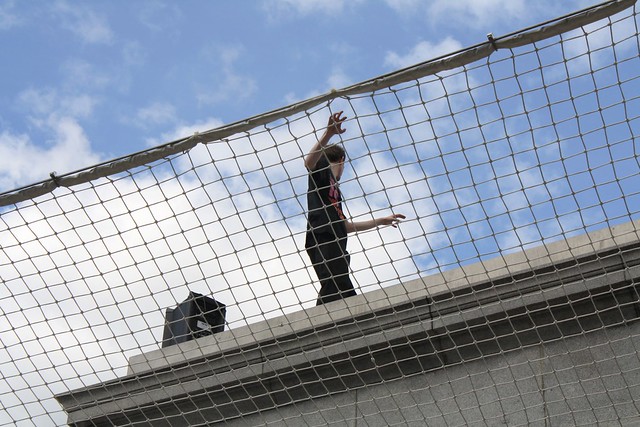
We have been here before, last year when AIPPI decided to support the idea and more recently when the UK IPO held a round table on the subject on 1 July 2014.  Now the UK IPO is trying to decide which scenario to support and their relative desirability.

We are offered various definitions of a grace period.

A. “All disclosures” grace period: A grace period of 12 months calculated from the filing date, applying to all disclosures, with no mandatory declaration required and prior user rights not applying throughout the grace period.

B. “Non-safety net” grace period: A grace period of 12 months calculated from the priority date (if applicable), applying only to disclosures made by (or derived from) the applicant, with no mandatory declaration required and prior user rights not applying throughout the grace period.

C. 6-month “safety net”: A grace period of 6 months calculated from the priority date (if applicable), applying only to disclosures made by (or derived from) the applicant, with mandatory declaration required and prior user rights applying throughout the grace period.

D. 12-month “safety net”: As above but with a duration of 12 months.

E. 12-month “safety net” with no declaration: As above but with no mandatory declaration required.

What makes it a safety net grace period is the business of prior user rights. While I have used the safety net idea hitherto as a reference to the safety net that a grace period provides for the patentee not the the third party user (sorry about the confusion).

Prior users might be those who have derived their information from the inventor. There is already protection in the UK in section 64 of the Patents Act for good faith prior users, so, I suppose we are saying if at the time you saw something and thought great idea and started to implement it and managed to do so before the inventor got to the Patent Office were you acting in good faith? Now at present when we see a good idea we may not know its in the patent process. Is it any different if we have a grace period? I think not. Lets not mess with prior user rights. Clearly they are needed though if other countries don't have them and we are playing for harmonisation across the IP5

Personally I am totally against declarations. They require full disclosure to the attorney and a burden of enquiry. They suppose there is certainty about whether a particular disclosure is confidential or not. If I speak to a novice inventor, they may tell me about various soundings they have made. Typically these would be with trusted confidantes. Sometimes there is a written NDA but not always. Even for the large IPO customer, completing disclosures is going to be hard for the Patent Department, so let's eliminate them. Who will advocate for them - the prior user not in terribly good faith perhaps. A patentee may want to make a disclosure to emphasise that something is not prior art. I would write that into the specification and it could be considered good practice and I rather like the idea. However voluntary declarations are a very different proposition than a mandatory one. I bet our insurers will advocate against any costly mandatory traps.

I think that means I support E - What do you think?

CIPA will no doubt be making representations. If you are lucky enough to have your August CIPA journal you will have the secret diary. Representatives of larger organisations seem to be against grace altogether as it encourages indiscipline among their already spirited inventors. They also cite desire for certainty - but even with first to file there is no certainty when we delay publication as realistically we must.

If we are looking to promote innovation and more specifically the implementation of innovation then the grace period  benefits the eager innovator and some of those eager innovators are the ones who are best for the economy.

Do comment. The IPO also want your help, preferably before Wednesday.