Showing posts with label upc. Show all posts

Saturday, 8 April 2017

Preparing for the Unified/Unitary Patent

Subject to any rebellion in Germany it now appears that the Community Patent will emerge from its enormously long gestation period in 2018. It won't be called a Community Patent it will be a "European Patent with Unitary Effect" mostly now called a  Unitary Patent (UP). There is Unitary Patent Package of legislation which seems to be where UPP comes from. The Package includes the arrangements for the Unified Patent Court (UPC). Not even the name is consistent so what can we expect of our attitudes to it.

I have just registered for the CIPA webinars which promise to help us get practical. Book soon the first is on 27 April 2017.  These webinars are free to members as it is considered desirable/essential that everyone who claims to be a patent attorney should be fully up to speed.

AIPPI also have en event on 31 May 2017 and you can book here. There should be a webinar for that too.

The main immediate concerns are
  • Choosing between an UP or a conventional EPO bundle when grant decisions are imminent after the package takes effect, and
  • Opt out of the UPC jurisdiction for existing European Patents 
The first concerns me most and I have been pondering the factors we need to put into the mix.
Is your client is exploiting the patent? are there licences? what are the probabilities of a dispute arising? what are the probabilities of an opposition? will your client want to maintain long term? does it  envisage significant growth or being bought out?

For what I would call the ordinary SME using its own patents, only filing for true innovation, and having a fairly parsimonious attitude to renewal fees the teenage UP would probably be an unlikely survivor but it is an easy choice in the early years. The fee scale was established in 2015 so these figures are probably going to increase before you pay them.

The other big issue for UK clients is Brexit and whether the European market is available for new innovations is accessible. Its also possible the unitary region wont include the UK after Brexit  but UK owners of UP will still be able to own them.

My current thinking is that the UP is good for optimistic entrepreneurs who see a growth future, but for the more established business who knows its market probably not.

To keep up to date follow BristowsUPC and for the progress of the court see the official Unified Patent Court site. You could also stroll past the court building in Aldgate and dream of appearing there

Monday, 10 August 2015

Are we UPP to speed on on Unified Patent Strategy

Patent applications filed at the EPO today could emerge on grant as Unitary Patents or European
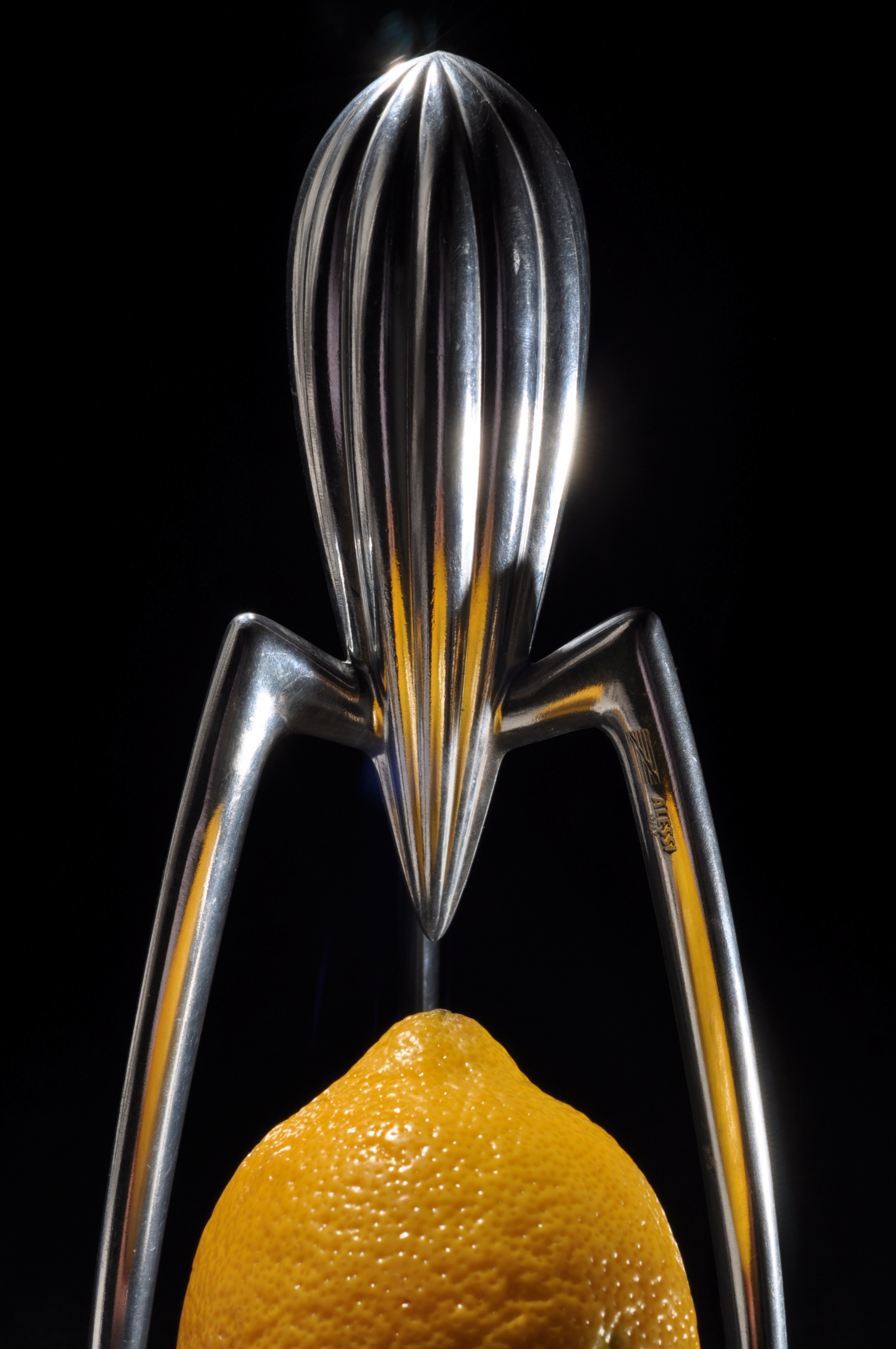
High Tech Lemon Squeezing
Patents of Unitary Effect - abbreviated to UPP (which really stands for Unitary Patent Protection). So far most of the news on this exciting topic has concentrated on the preparations for the Unified Patent Court (UPC) and its procedure. UPC even has its own website and its news machine is very exciting and efficient. The date it all goes live could be in 2016.

My latest copy of the CIPA Journal -available to members using Safari or Internet Explorer here contains at page 59 an interesting article by Ellie Purnell reporting on the Manchester meeting which  encouraged us all to keep up-to-date. (If you read it you will understand what I mean when I say "I am squeezing her lemons").

We even know what the renewal fees of the UPP will be when one is eventually granted as this was agreed back in June. They are really very interesting. If you could get an UPP granted quickly you could save a bundle on awful EPO renewal fees on pending applications. Not until the 12th year does a UPP cost more to maintain than an application languishing before the EPO. This is a serious wake-up call to patent attorneys: we need to get patents granted or abandoned. I like their thinking.

Now I expect that all the big firms have been brainstorming their strategies for their clients and are able to advise on whether EPO applications or national applications are the right route on each individual case. However, solos might be a little bit less well positioned for brainstorming so I thought I'd look and see what resources were available to help clients and solo strategists.

The EPO has some useful FAQ here but they are not in the business of offering strategic advice.

The companies filing their priority applications now, the UPP is something they need to take into account, especially if they think they might want national patents rather than put all their eggs in one basket at the unitary patent court. Judging by the is the concern amongst big business for opting out their classical European patents and their distress about the possibility of paying €80 for each opted out patent family, we must expect that industrial patent departments are well abreast of the issues, so are they abandoning the EPO in droves?

The real decision time if you are on the EPO route is after grant. At that stage you have to choose whether to go for a UPP (patent with unitary effect) or national patents or a combination. Combination is necessary because the UPP does not cover all EPO states and will never do so since some of them like Switzerland are outside the European Union. Therefore, you may think it's safe to carry on with the standard PCT EPO route, but is it? If the EPO is going to stall applications with an adverse search report, sticking with the EPO could be an expensive option. Maybe long pendencies are quite attractive to an applicant and therefore choosing our now under-resourced national patent offices for examination might be an interesting option for keeping hopeless patent hopes alive and your competitors wondering.

What do you think. Please draw attention to any relevant articles?


Sunday, 28 June 2015

Blogging Suspension: Please help me get Twitter rights back

There are a number of topics I had hoped to blog about. These include:
  • The expansion of the Hague International Design system so that it now allows our clients to secure design protection at OHIM and in the USA and perhaps less significantly Japan
  • The changes to CIPA bye-laws which will be the subject of a webinar on July 8 from CIPA Hall. If you are a member you can book here
  • The Unified Patent Court fees consultation and what it means for more modest patent holders and the patent strategies start ups should follow as a result of their potential exclusion from the new court.
  • Progress on the introduction of a grace period for UK patent applicants by the UK-IPO
  • The delightful free speech by Judge Alex Koszinski at the 2015 Sir Hugh Laddie lecture on 24 June 2015 at UCL. Peter Groves has blogged about it here
I have not blogged about these important issues because I cannot draw attention to my blog posts any longer on Twitter. This blog is blacklisted as spam and links to it cannot be tweeted. I have reported it and this is the feedback


Thanks for your report.

In order to make Twitter more secure, we have automations in place that could impact your ability to Tweet certain links. If you’re having issues Tweeting a link, our team will review your request and take appropriate action on the reported URL. You can find more information on this topic in this help center article: https://support.twitter.com/articles/90491

Though we cannot respond to individual reports, the information provided helps us make Twitter better for everyone.
So I hope you feel that silencing blogs is better for you. If not and you cannot tweet a link to this blog or this post. Feel free to report it to twitter  support. This is the page you need https://support.twitter.com/forms/spam. Maybe if enough of you want us to continue then Twitter will relent.
 

Wednesday, 27 August 2014

What do you call a UPC judge?

Unified patent courts (UPCs) will be with our European readers soon, though it's too early to say precisely when. Some lucky person will, when the UPC opens its doors for the first time, become the first human on planet Earth to address a UPC judge face-to-face. This encounter raises a small but intriguing issue: how does one address a IPC judge? Something along the lines of "My Lord" would be grand, and deeply respectful, but is it appropriate for a union of countries of which many have scrapped the trappings of lordship and ladyship. "Your honour" is a possibility too -- but perhaps honour is something that has to be earned rather than accorded in the hope that the addressee may turn out to be a person of honour.  "Your Worship" is definitely a non-runner, and "Your Judgeship" sounds contrived.

Presumably the mode of address will have to sound plausible in whatever language the court operates, and will have to work in terms of gender equality.

Maybe it's time to institute a new word for a UPC judge, just as we had to mint a new word for Europe's most common currency.  Can we come up with something more original than "the Euro", though?  Suggestions?

Saturday, 7 June 2014

Dear President of the Chartered Institute of Patent Attorneys

Andrea Brewster CIPA VP and Catriona Hammer, President
After the excitement of the CIPA elections, it is time to learn what we can expect of the new Presidency.

Our new President works full time for a large  corporate  GE Healthcare  so the three priorities she highlights in her address (printed in the CIPA Journal for May which may eventually appear online here but is briefly noted now on her CIPA  profile) are influenced by that personal agenda. They are:

  • Developing best practises in areas such as governance, compliance and diversity (the Duck says this is so not relevant to a Solo practitioner. I can't do diversity and I hardly need a policy to demonstrate that I don't take bribes. I do happily sign all the documents that say I won't buy coffee for anyone employed by a compliant client. These seem to be required by larger clients but I don't see that they do much for the profession.)
  • Policy contributions on the UPC and Rules of Procedure (the Duck comments that elsewhere in the Journal  the Chief Executive reports criticism by Mr Justice Birss of the profession's apathy and subdued response to the Rules. When the rules of representation were being discussed I was unable to influence CIPA to back my proposal as they prefer to aim for the hopeless case of having all CIPA Fellows grandfathered in, so frankly for most CIPA Fellows the UPC is remote and a threat rather than an opportunity and I need to remain a Solicitor to participate)
  • Education (the Duck says that would be good if it were focused on competence. I did ask my Institute to offer assistance in advocacy skills development but the proposal has been rejected in a silent way. CIPA have just announced a re-run course for September to encourage just 30 delegates to participate in a case study course at luxurious Missenden Abbey for over £1k: price to be announced on Monday. One thing that I learned on my Higher Rights course was that the case study is a tool and not the main focus. If you have a study that relates to your area of expertise, delegates retire to their comfort zone and spend time considering the specific facts of the study in the light of their expertise in the law of added subject matter or obviousness and fail to focus on the litigation skills. )
So what does the membership need from the Institute? Firstly it needs the Council to focus on representing rather than preaching. Ensuring competence is vital but so is ensuring that the Profession is delivering what the market needs. At the moment my perception is that the profession serves the needs of the large corporate fairly well (well that's the profitable bit) but we are leaving the access to IP awareness to the UK IPO - who are doing a sterling job.

To that end I would like to see tools developed to allow members to test their competence in core areas with a view to helping us work on competence. As a Solo practitioner it is difficult to know whether you are as up to speed on claim drafting or EPO rules of procedure, CPR as as you need to be. In my experience we all have to be very self-confident as our larger colleagues seeking work from our clients are all too willing to allege incompetence. Nevertheless keeping up to date with practice is vital. What we don't want is someone to tell us about individual cases. We can read. What we need is analysis and extraction of the relevant lessons that can be put into practice. If the Institute does Education well it would be worth it and the rest would follow. It should not be in third place.

Enough of my bitter wanderings. What do you want from your Institute.  Let them hear it, please

Thursday, 6 March 2014

Call to Arms for UK Patent Litigators

If you are European Patent Attorney and hope to practice in the future before the Unified Patent Court, now
is the time to make sure that your qualifications will allow you to be entered on the list of representatives.

There is currently circulating covertly, a draft proposal for rules on the European Patent Litigation Certificate and other appropriate qualifications. As presently drafted any European Patent Attorney who has an LLM or a law degree will have the right to go on the list. I approve. Sadly my CPE didn't get me a degree, so I need to try and persuade Laura Starrs at the UK IPO and her team to suggest some appropriate changes. If you think you may be in a similar position get in touch with your professional body CIPA where Vicki Salmon is working on their submissions or the IPO directly.

Many Chartered Patent Agents are much miffed that other European countries do not recognise that we are lawyers. We have to accept that that battle was lost when the Court of Justice of the European Union decided only solicitors and barristers were lawyers from the UK and that was some time back when OHIM appeals became significant business. The UK government has not helped in all that time and I don't expect them too now.

Thursday, 19 September 2013

Unified Patent Court: let clarity and love remain

I want to practice before the unified patent court. This is the court that will achieve the ambition of a single court to decide patent disputes for a large portion of the European Union. It needs a procedure that is simple and accessible. While patent litigation is probably inappropriate for litigants in person, it should still not require representatives that need to have studied in big law firms for many years before becoming competent. The rules of procedure need to be clear and understandable. They were put out to public consultation recently. It's a sham and a disaster because this is a network of contradictory, messy, detailed rules that sometimes try to adjust the principles set out in the agreement. It seems that the computer system to support the court is to be developed soon. The designers of that will need to understand how the court is supposed to work. They won't.

Perhaps we should bring in the teaching professions at this stage. How would you teach this system to a student. What are the principles:
  • How are the issues between the parties set out ?
  • Who is in control of the procdure: an efficient court administration or the parties themselves as in the UK?
  • Is it all done on paper?
  • Where do we file?
  • How and when do we exchange documents?
  • What are the fees?
  • Where is everything published online?
These are the things a student needs to know and the IT people designing the support and workflow system need to know them too. Where do we find them in these rules.

It would be interesting to see what professional service process designers think of this. Maybe I should ask my friends at SNOOK ? It certainly seems to me that leaving the parties in control for 6 months before anybody can reign them in means that we have the same old expensive system where most of the early work is wasted as it is in most EPO oppositions.

Obviously this rant is not helpful and the detailed and wondrous AIPPI paper (sent to members on 11 September and not yet on the AIPPI UK site ) is likely to be more in line with the consultation requirements, dealing as it does in great detail with drafting points on many of the 382 rules and they aren't things like "Don't be Ridiculous - this is being funded by taxpayers who don't even provide legal aid any more to their own citizens" in respect of the section on Legal Aid but Article 71 says the Rules of Procedure must deal with it for natural persons so we must, but we hardly need to repeat the Article in Rule 375 do we?

The legal aid we all need is simple easily navigable rules, so we can eliminate the need for a new profession of UPC procedure rules experts at €400 per hour.