Showing posts with label patent renewal fees. Show all posts

Friday, 14 April 2017

James Peel looks at the UK IPO fees review

by kenteegardin
Fellow Patent SOLO James Peel of J.P.Peel & Co Ltd has been taking a look at the recently published Consultation document from the UK -IPO as they seek to balance the books. Here is his summary:

The proposed changes are a balance between a desire to increase income whilst changing the behaviour of applicants to simplify the UK IPO workload, particularly by encouraging applicants to file “better quality” patent applications. As an example, they report that in one year, ten individuals filed 3000 patent applications of which 51 were examined and only three resulted in granted patents which were renewed for just a few years.

The UK IPO says that they break even on costs/income after a patent has been renewed for 15 years. The fee increases may be needed to pay the salaries of the new patent examiners as their numbers have more than doubled in the past six months. Pressure had been exerted by CIPA to sort out the backlogs which were making it hard for the UK IPO to meet their own deadlines. Some years ago, national patent offices in Europe appeared to be struggling to find a role for themselves with a drop off in filings because of the success of the EPO. The UK IPO marketed itself as providing a fast and low cost route to patent protection. This appears to have been successful but at a cost to their non-urgent work. It must be a sign of confidence in their strategy and offering that the UK IPO are putting their fees up.

Two approaches to the fee increases are proposed: the introduction of new fees and increases in prosecution fees or an increase in renewal fees but with lower new fees and lower increases in prosecution fees. The latter approach is unlikely to change applicants’ behaviour though, and an opportunity might be missed.

The new fees are a charge of £10 for each page over 35 pages to be included in the application fee and a fee of £30 for each claim above 15 claims to be included in the search fee. The UK IPO predicts that the introduction of a claims fee will increase their income per case by about £210 as the average case has 22 claims. This calculation assumes that the behaviour of applicants will not change. I wonder if they took the elimination of omnibus claims into account. Also, the fees for long specifications in other jurisdictions can largely be eliminated on most cases by careful choice of font size, margins and line spacing.

In percentage terms at least, the biggest change is to the application fee which in one proposal is being tripled from £20/£30 to £60/£90 with a 25% surcharge for late payment. It is this fee which is aimed at dissuading “frivolous” applications. Such an increase in upfront costs is balanced with smaller increases to the search and examination fees.

There are greater fee increases for paper based transactions and so I wonder if we are being guided towards online transactions.  (Wonder no longer, James, the UK is going digital). This may inadvertently favour lone applicants as online transactions are on a case by case basis: it is not possible to make batch payments online.

Following the unpredictable result of the dramatic increase in claims fees at the EPO in April 2008, it is good that the UK IPO are consulting about the changes. It is now up to us to respond.

We are invited to respond by email by 6 June 2017 (Note the precise 11:45pm deadline). The earliest date on which the new fees could come into force is 1 October 2017.

Friday, 1 August 2014

IPREG and its Ambitions

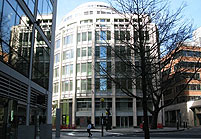
Rolls Building
the access door to UK patent justice
IPReg, the regulator of patent and trademark attorneys has recently published its proposed budget and  business plan for 2015. The regulated tend to think of IPReg as the maker of rules of conduct and the provider of discipline. However, its true role is quite different from that. Perhaps its primary purpose is to protect consumers, which includes micro-businesses, against the wiles of us nasty professionals. Nevertheless, we are funding it, so it is worth while understanding what we are funding them to do and whether it is in parallel, diverges from or is directly in conflict with our interests as professionals.

'Promoting and maintaining adherence to the Professional Principles' is is right at the bottom of the list of IPReg's objectives in their Plan.  One of the interesting ones higher up is 'Improving access to Justice'. I am all in favour of a improving access to justice. What I am not too sure of is whether the best way for me to do that is by paying IPReg to do research. They tell me with priority 2 they are going to commission and review research on uregulated intellectual property legal services and monitor the small claims track of the intellectual property enterprise court.

Personally, I would love to monitor the small claims track of the intellectual property enterprise court. I can do so by spending time in the Rolls Building and paying £7 to borrow the book listing claims issued for a few minutes. That's about as far as a member of the public can go. I hope IPReg have greater access.  In reality, the only way their small organisation which the chairman boasts in his 24 July letter is staffed entirely by part-timers, is to commission some external profit making organisation to do this. Universities are included even if they need the profit to maintain their over ostentatious buildings and other activities that don't result in a dividend to shareholders. Frankly how does financing research help and what can IPReg do with the evidence. We need to have a better understanding of where they are going with this and how it will impact on/benefit the regulated or the consumer.

The first limb of this research might be welcomed by the regulated profession as it may propvide detailed evidence of the competitive environment in which we live and work. Unfortunately, the huge growth in unregulated services is often to the benefit of the consumer. See for example Renewals Desk which recently attracted a lot of interest over on the IPKat blog. We can also expect more well qualified people to move away from the regulated profession simply to keep their own costs down. That chairman's letter promises us that our cost of regulation is about to go up. He says it compares favourably with that charged by other regulators such as the SRA (details of their proposed  fees for 2014-15 are here). The difficulty is that in order to provide access to justice I need to be regulated by both and the market I see is mainly for pro bono work.

Turning to the IPEC small claims track (which IPReg think is important enough to be a priority over IPEC as a whole or even the UPC which has been taking up CIPA's time at the moment), it is designed to allow trademark and copyright owners to get do it yourself justice without the need for expensive regulated advice. Since a good part of IPReg's work is regulation of patent attorneys and infringement of patents and registered designs is outside the scope of the small claims track, it is difficult to see why this minority area is a priority for IPReg. Moreover, is there a real need for consumers to have access to justice for trademark infringement?. No there is not. Only traders have trademarks. It's possible that a number of micro-businesses also guarded by the regulators are being bullied by brand owners on the small claims track and the possibility that this is doing injustice is certainly worthy of research and investigation but please not out of IPReg fees. The IPO (who already have IPEC research under way) and the Ministry of Justice are more appropriate entities to deal with such matters.

By the way there is one of those Consultation things on the IPReg budget and buiness plas so another task for ITMA and CIPA to get to grips with and we can see what CIPA did say after 18 September as they are now publishing consultation responses in one easy to find place.