Showing posts with label Registered design. Show all posts

Saturday, 11 March 2017

ACID stands up for the UK profession

One of the greatest supporters of the UK creative sector is Dids Macdonald and the Anti Copying In Design Group ACID which she masterminds. I frequently suggest to my creative clients that they become members as they start their business journey. I notice on twitter that Dids was concerned that Brexit meant the loss to UK designers of Community Unregistered Design Right - not something that is much enforced. In the UK our own unregistered design right has a far longer duration but it obviously does not give you free rights beyond the English channel.

As I have previously discussed many design clients are generally unwilling to pay for even great value legal support.
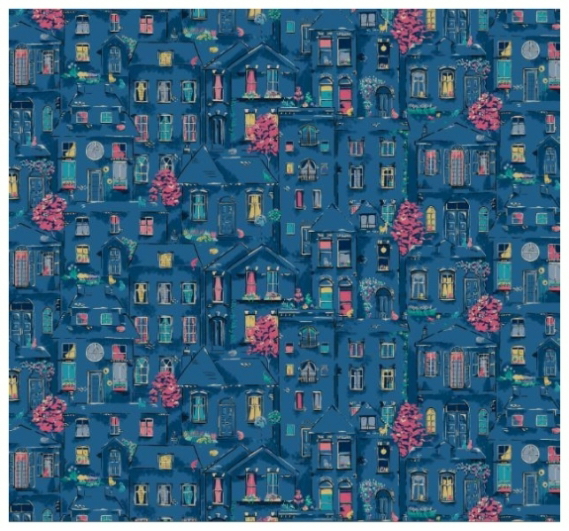
Cath Kidston's registered Design DM/093635-12

The real loss to those UK based designers is the ability to register a Community Registered Design without legal representation. Post Brexit they will need to work with a representative. This can't be a local UK one unless some deal is done. Its hardly likely that a deal will be done to allow UK representative to act before the EU IPO. Its not going to be a high priority for the UK government in the negotiation due to the low value of existing business to the UK legal profession that will be lost.

However the UK government is committed to joining the Hague System. At present a UK designer can access Hague as an EU citizen because the EU is a contracting party. Not that many do as you can see from the Hague Express Database which reveals only 3 designs with GB addresses registered so far in 2017. However post the UK accession to Hague it will become a great deal more attractive. With a single application you can have a UK registered design and a Community Registered Design and if you wish ask for protection in any of the other territories which are Hague Contracting parties Switzerland Norway and Turkey are the useful European contracting parties. US and Japan are the most likely to be of economic value to British designers.

Therefore my free advice to British creatives is that registration via Hague is your best route to protection beyond these shores. Cath Kidston thinks registration may be useful but her highly creative company is choosing to register the type of textile fabric design that is the simplest to represent as shown above. The Cath Kidston business will also have copyright in that design but  no doubt appreciates that the proof of copying element of a copyright case can be onerous.

Planning for Brexit for our UK clients is something we should now be considering. Using Hague is just one proposal. In future posts I would like to consider what is the best advice for our UK clients to prepare their IP portfolios. It seems we can rely on CIPA and CITMA to do the best they can for our overseas clients.

Wednesday, 16 September 2015

Design Clients - the impossible market

Where they agreed
The UK Intellectual Property Office has just launched a consultation paper to determine whether the UK should join the Hague Agreement for the protection of industrial designs. Recently, the UK IPO has launched a twitter feed (@BeautifulIP) to promote design registration, mainly focusing on the low cost and benefits of registration.

It knows from the activities of organisations like ACID that design matters and is really important to UK designers, who just hate being copied or even emulated. What is more difficult to understand is why the registration systems are the most neglected part of the IP system. Even the grace period has not helped much. There is, of course, competition from Europe with the Community Design System and there is no doubt that their filing interface is a million times better than the UK one - which is still paper based. Nevertheless for a single design €350 is a lot more than £60.

A UK designer can already access the Hague System since the UK is part of the European Union, which is a member. Hague allows you to file online. It is operated by WIPO but unlike the PCT and Madrid systems for patents and trademarks, Hague goes all the way and gives you design protection, though you may still need to deal with national offices if they have additonal examination issues within 6 months. You can also file and manage your applications online. Now that you can use the system to protect your design in Europe, the USA and Japan, it has become a practical proposition for designers to use. Prior to May 2015 when the US and Japan joined, the scope of protection available beyond the EU had almost no overlap with the real market for exclusively designed products.

The biggest problem I have when dealing with clients that are interested in protecting their designs is explaining to them the nature of the representations they are going to need. These images are the essence of what is protected and a simple snapshot, a glossy picture from your catalogue, or even a clip from your production drawings isn't likely to help the judge if you want to enforce the design registration. The judge can't and won't go behind your scrappy image (even if it was taken at phenomenal cost by an art photographer)  and look at your preparatory work. This was why things went badly for the Trunki designer. Even the Supreme Court may not be able to help him. Look out for the hearing of PMS International Limited (Respondent) v Magmatic Limited 

Design clients want great value for money. They want certainty. They don't want to engage in discussions about which aspects of their design are significant and whether colour, shading or particular elements of the shape are original or commonplace. They want to evolve and change their designs frequently. They are economical with both funds and time. They are creative and don't mix well with the pedantry of lawyers. Even those who have suffered plagiarism are reluctant to make upfront investments and they prefer the court of public opinion to IPEC. Design collections are typically numerous, frequently refreshed and many designs fall by the wayside before the one classic for which 25 years of protection would be of value is found.

The UK government wants to help and support these people. I applaud them. They may be able to go where the profession cannot. Designers have abandoned lawyers but they cannot abandon the law if they want to manage what they see as plagiarism. I hope that our leading designers like Tom Dixon will stand up and respond to the good Baroness in her efforts to get UK designers to go to the WIPO site and protect their designs both in the UK and possibly in other countries which belong to the system. He briefly flirted with the system in 2011. You can search here.

Certainly if we are going to exit Europe, it's going to be a good idea for the UK to join in its own right.  The consultation paper emphasises fee savings but fails to consider how designs need to be represented for effective protection, especially in the US, where refusals may be more likely.

Do you have any design clients left? If so it may be worth responding to this consultation before 10 November 2015. The UK government is doing its very best to assist the creative industries I hope they respond and encourage the UK to sign up.