Showing posts with label copyright. Show all posts

Monday, 1 May 2017

Website licensing misery

I'm really not clever enough to use my own photographs to illustrate my own website. Therefore, I turn to stock photography libraries which used to supply royalty free licenses which meant that businesses like mine, which refresh their website once every blue moon, don't have to worry about paying royalties just a one-off fee to the photographer for the right to put the photo on the website and leave it there for some unspecified period. However, when I visited Alamy, I was offered a five year licence for website use. Is this an impracticable new trend or have I just been out of the stock photography market for too long?

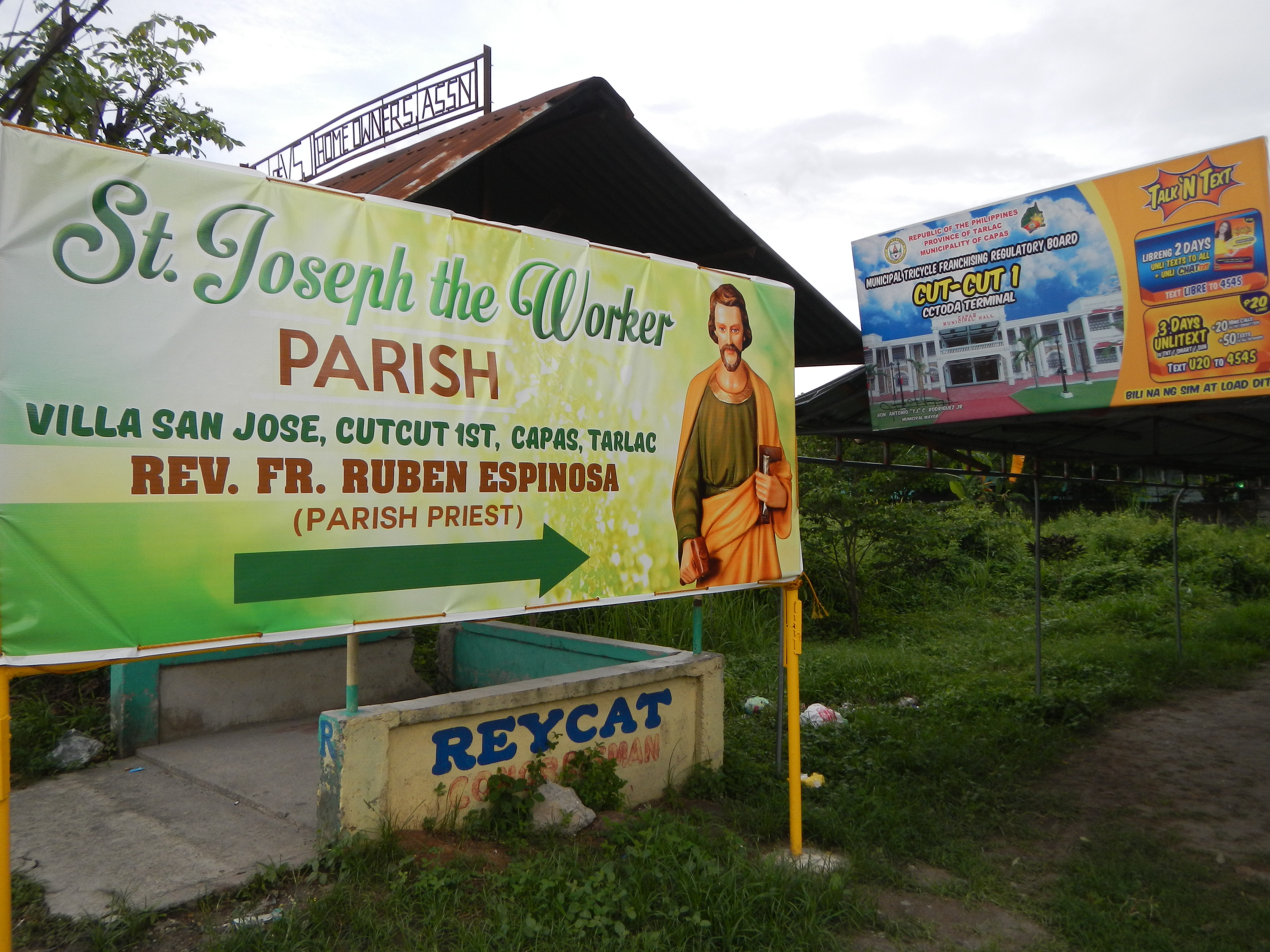
For the purposes of this blog, I usually go to Google image search and look for Images that are labelled for reuse. Some might argue this website is commercial (even though it is not written for any direct economic benefit, but is that the test) so I tend to look for unrestricted reuse so I'm afraid I can't show you the Tate's image of St Joseph at work (I'm writing this on his feast day) even though the original artwork is out of copyright. However, thanks to the generosity of a photographer in the Philippines and Wikimedia Commons you can enjoy this image of a church sign in the Philippines.

The photographer donated this to the public domain and I am grateful for his generosity. However I must remember not to speak to the German market. According to a recent newsletter I received from the German IP firm Meissner Bolte a reform of German copyright contract law became effective on 1 March 2017. This amends the German copyright act and appears to prevent my desired single payment for the use of a copyright work. I am not clear whether this simply prevents exclusive licences, which might be okay because I'm not looking for an exclusive licence. Section 40 a of the German copyright act now provides that a copyright owner can after 10 years exploit and otherwise dispose of work himself regardless of previous contracts.  I shall be seeking further clarification when I meet my German colleagues at #INTA17 in Barcelona.

Copyright law is seriously ripe for reform as voices more authoritative than mine (Sir Richard Arnold) have been saying for some time. You can listen to an excellent BBC Radio 4 programme on the topic here.  Unfortunately it's an enormous topic and the level of protection required for a website ready photograph, a doodle and a truly original painting by Sir John Everett Millais really isn't justifiably the same.

I think my website might be words only.  That's going to be really boring.

Monday, 28 November 2016

Immunity from threats actions for regulated lawyers survives an unexpected attack

The Intellectual Property (Unjustified Threats) Bill has been making its way through the stages in the House of Lords and has finally been published again in the form in which it has been reported back to the House for its third reading before it goes to the Commons.

This is a bill that deals with unjustified threats of infringement in respect of registered rights and design right. It tries to create a balance between what the owner of the rights can say and those that may be affected by unjustified threats. It also allows immunity to professional advisers who are acting on instructions. This is probably the most important bit.

It only covers patents, registered designs, design right and all forms of registered trademarks. If you own copyright you can continue making unjustified threats without reference to this new law when it is finally enacted. This is perhaps because there was no previous law on unjustified threats of copyright infringment to be amended to bring them all into harmony. In the 2014 report the Law Commission said "We have not been asked to look at threats of copyright infringement, which raise different (and highly contentious) issues." 

This page, provided on the UK Parliament website, links to the various stages and documents relating to this Bill (but not the oral evidence I tweeted about).  The Law Commission also has a useful page showing the historical background and consultations that led to the Bill

I was rather surprised when I read the debate on report that there was resistance to indemnifying the professional representatives from a somewhat unexpected quarter - a former patent attorney, Sharon Bowles (as she was when on he register, before becoming a Baroness) . She tabled an amendment that would have required the instructions to be "specific". You can read the discussion in full here. Essentially, like Robin Jacob's evidence, the amendment was meant to probe the risk that some professional advisers might be wayward and that those from overseas who are still exempted if regulated, might not be disciplined by their regulators for taking an aggressive common cause with their client. While there are exceptional cases, the serial copyright infringement threatener (2009-2102), Andrew Crossley for example, it would be unfortunate to lose the protection that is so much needed by the vast majority. Only once have I and my then firm been personally threatened with an unjustified threats action. It did indeed turn out to be fatal to the client relationship even though it was not pursued. Accordingly, I was personally pleased that the amendment was withdrawn after a spirited defence of the underlying principle by the current Baroness who is  Minister of IP. She also took the opportunity to clarify that the indemnified professional advisers include those in employment.

Wednesday, 1 October 2014

a new role for the Treasury Solicitors Department (Bona Vacantia Division) ?

Sally Cooper is feeling compassionate.


There are many good things in the “Orphan works diligent search guidance for applicants” published by the UK Government on 17th September 2014 "
 Its three key documents are
  • “Orphan works diligent search guidance : Film and sound” and 
  • “Orphan works diligent search guidance : Literary Works” and 
  • ”Orphan works diligent search guidance : Still visual art”. 
As and when I’m next involved in circumstances where an owner of copyright is unknown or cannot be located and, in consequence, there’s a suggestion of applying for a licence under the orphan works licensing scheme, I’ll know there’s where to look for a list of sources - and additional sources – that I can review in course of the diligent search recommended as part of the application process.

One additional source that attracted attention is the Treasury Solicitors Department (Bona Vacantia Division). All three documents advise “An applicant would search here in respect of bona vacantia which is the name given to ownerless property, which by law passes to the Crown. The Treasury Solicitors act for the Crown to administer the disposal of assets of people who die intestate (without a will) and without known kin (entitled blood relatives) and collect the assets of dissolved companies (emphasis supplied) ..... in England and Wales”. Emphasis is supplied because – so often – the owner of copyright is not an individual (or group of individuals) but a company because (per section 11 (2) Copyright, Designs & Patents Act 1988) :
“Where a literary, dramatic, musical or artistic work, or a film, is made by an employee in the course of his employment, his employer is the first owner of any copyright in the work subject to any agreement to the contrary”. 

Curiosity on reading about this additional source (relevant to Film and sound / Literary works / Still visual art) took me to the hypothetical client who had seen – at a trade exhibition – a computer game that was of interest but which (sadly) never made it to market as the company designing and developing the game was dissolved pre-release. This hypothetical client is able to establish that the company registered the name of the game as a trade mark [ by consulting, at the time of writing, the website of the Intellectual Property Office at www.ipo.gov.uk ] but cannot discover whether film / sound / literary works (extending to software) / still visual art that were materials on show at the exhibition (and which he wants to buy so as to finish and release the game) happened in house or followed from an agreement with a third party. All he can say is that these may or may not have been assets of the dissolved company.

At first, the website of the Treasury Solicitor’s Bona Vacantia Division looks friendly and helpful : https://www.gov.uk/government/organisations/bona-vacantia  But it soon becomes clear that the Division is focused on “the ownership of assets of people”. For example, its “Social Media at BVD” initiative includes use of @bonavacantia_uk on Twitter as from March 2012 : statistics, at the time of writing, are 293 tweets and 205 followers and (so far as I can see) no reference at all to the Division’s role as collector of the assets of dissolved companies. Moving on to “How to buy intellectual property that belonged to a dissolved company and now belongs to the Crown” it is made clear to the prospective purchaser (my client) that “[ the Division ] will not transfer bona vacantia intellectual property with any title guarantee or provide any representations or warranties in connection with it (express or implied)”. Moreover, the prospective purchaser must understand : “ If [ the Division ] offer to sell they will only do so for the open market value on the intellectual property subject always to the following minimum prices : - for a UK trademark £ 1,000 - for an EU trademark £ 2,000 - for a copyright £ 1,000 - for a patent or other intellectual property £ 1,000. You will have to pay VAT on the consideration. You will also have to pay [ the Division’s ] costs of £ 300 plus VAT for each asset”.

I have not been able to find information on how many transfers of assets of dissolved companies are made by the Treasury Solicitors Department (Bona Vacantia Division) but it occurs to me this might properly be the subject of a “Freedom Of Information” request : https://www.gov.uk/make-a-freedom-of-information-request/the-freedom-of-information-act In the future, perhaps a further “Freedom of Information” request might be made to ascertain the number of requests has [ the Division ] receives (and responds to) in consequence of the Government’s “Orphan works due diligence guidance” ?

This may all seem gloriously academic – but curiosity stays with me as I ponder :
(a) the extent to which there is dialogue between the Intellectual Property Office and the Treasury Solicitors Department (Bona Vacantia Division), and
(b) the role of [ the Division ] in (shall we say) ensuring the availability and re-use of intellectual property (whether as assets of dissolved companies or assets that are orphaned works).

Sally Cooper

Wednesday, 27 August 2014

Background Copyright troubles Sally Cooper

From time to time I remember the essay question : “Original research = intelligent plagiarism. Discuss”. Particularly, it comes to mind whenever I come across disparate pieces of information and want to link them. The link in what follows is Sunday (day of the week) and buildings (or rather pictures of buildings) : no claim is made to originality (or intelligence).

On Sunday last (so August 2014) I went to the exhibition at the National Portrait Gallery titled “Virginia Woolf : Art, Life and Vision  A few days earlier I had read the exciting post of Eleonora Rosati on IPKat [ Thursday, 21 August 2014 : Taking a selfie inside the National Gallery: a copyright infringement?  ] which brought the news that “following similar moves by a number of other UK institutions .... the National Gallery in London has changed its strict no-photos-(please) policy”.


Was it the case (I asked myself) that the National Portrait Gallery was one of the “other UK institutions” ? Could I (for example) place myself in front of T.S. Eliot in this photograph and take a selfie of Virginia Woolf leaning towards me (replacing T.S. Eliot)?   Alas, the website of the National Portrait Gallery is clear that
“Photography is not permitted in temporary exhibitions or displays with loans”

So no photograph. But two thoughts :
1) on period of copyright : the line (bottom of the photograph on the website) is (C) National Portrait Gallery London. Lady Ottoline Morrell took the photograph of Eliot and Woolf in 1924. She died in 1938. So copyright expired in 2008 ?

20 on Representation of certain artistic works on public display” : Section 62 Copyright,Designs and Patents Act 1988 ('CDPA') applies to “buildings” and provides that “The copyright in such .... is not infringed by ...... making a photograph ... of it”. The follow-on is that “ Nor is the copyright infringed by the issue to the public of copies, or the communication to the public, of anything whose making was, by virtue of this section, not an infringement of the copyright”. So presumably I can take a photograph of the building that is the National Portrait Gallery and include that photograph in a (greetings) card which I post (online) on social media and post (envelope-with-stamp) to family and friends and others WITHOUT risk of an allegation of copyright infringement ?

On Sunday a couple of years ago (September 2012) I visited Spa in Belgium for the F1 Grand Prix and took a seat in the stand at Eau Rouge (being an “uphill corner” on the circuit). So a chord was struck when Lee Curtis published on the Linked In Group of Automotives+ IP news that “ .... Infiniti have applied to register the trade mark EAU ROUGE in the US for cars, despite the fact the mark has been registered in the EU by the famous race track”

The detail that attracted attention was Lee’s reference to “the UKIPO practice on the registration of the names of famous buildings”. The relevant paragraph in the Manual – headed FAMOUS BUILDINGS (Pictorial representations (emphasis supplied) or names of well known buildings) - contains the text :
“traders in the area of a famous building, which is likely to be a tourist attraction, should be free to produce mementos and ornaments bearing the name or representation (emphasis supplied) of the building without infringing the rights of another."
Also the text :
“if the building is a tourist attraction then the objection should be raised”. 
As to where it leads :
A) If I take a photograph of the building that is the National Portrait Gallery and thereafter distribute this photograph – the law of copyright sanctions this activity : section 62 CDPA 1988 (above)
B) If I take a photograph of the building that is the National Portrait Gallery and try to register this (representation) as a trade mark at the UK Trade Mark Registry, there is likely to be discussion with the Registry as to whether the mark applied for is a famous building / tourist attraction : see Manual / UKIPO practice (above)
C) The interests of the National Portrait Gallery lie in the UK Trade Mark Registry coming to the conclusion that the building that is the National Portrait Gallery is a famous building / tourist attraction so that my attempt to register is refused
D) But such a conclusion means (presumably) that an Application of the National Portrait Gallery to try to register a photograph of the building that is the National Portrait Gallery must also fail.

So (I ask myself) will the public-spirited owners of buildings which have a “Photographic Policy” be amending same with the note “This building is a famous building / tourist attraction” in the hope this deflects / reduces the possibility of a photograph (representation) of that building being registered by a third party as a trade mark ?

Sunday, 23 September 2012

Driving on the Small Claims Track

The barriers to enforcement of small IP claims will be lifted from 1 October 2012.
If you are an aggrieved designer, photographer or even brand owner, relief is at hand on the Patents County Court Small Claims Track. Question is how do you drive on it.
Are you eligible?:
Your claim must relate to a trademark, passing off, a copyright or unregistered design right and be worth less than £5000 and that presumably includes cases where all you want is an injunction to stop someone trading as you. But note that you must wait for the trial to get that injunction as there is no interim relief on this track.
How do you start?:
First write to the person setting out the problem as you see it and give them time to reply. Tell them what your rights are, what they have done wrong, what you want and when you want it by. The letter should comply with the pre-action protocol and should say so. Be reasonable and polite the court will see this letter.
If you don't get what you want you need to fill in your Claim Form. You need to set out the particulars of your claim and say you want the  claim to be allocated to the small claims track.
What does it cost?:
The fee depends on how much money you are claiming. For a photograph used without permission it only seems likely you will get more than the National Union of Journalist's Guidelines. See a judgement from the Court in Delves- Broughton v House of Harlot. If you want an injunction its £175 and if you want damages it adds from £35 to £120.

Where do I get help?:
From one of the regular readers of this blog who is a solicitor and will offer you a fixed fee deal. However it doesn't have to be a solicitor. You can use pretty much anyone if you are prepared to attend court with them. You can also use the free mediation service provided by the Courts. If you do use a solicitor there is minimal scope for costs recovery so expect to pay a fee for help and do a lot of the work yourself. Finally there is not a lot of court resource for this service so it all may take a bit of time if there has to be a hearing. However because you can have the matter resolved by the Court that is a big incentive for your claim letter not to be ignored as it may have been before.

The above is intended as something of a idiot's guide intended for  users rather than our email subscribers. Lots of lovely detailed chapter and verse can also be found on Jane Lambert's blog. Its also worth reviewing the Government responses to the call for evidence on this as published by the IPO in March 2012.

Sunday, 11 October 2009

Understanding Copyright in Patent Prosecution

One of the biggest problems the governments of the world have in designing copyright laws is making their scope well understood to those who are subject to them. This means keeping it simple. Members of the public need to know when they can copy and when they can not.

You would expect specialist IP practitioners, such as patent agents, to understand how copyright impacts their everyday work.

Sadly the Berne Convention does not prescribe every potential limitation on the scope of copyright, although it does sanction certain free uses that countries may cover in their national legislation. In English law, Copyright is not infringed by anything done for the purposes of judicial proceedings (s45(1) CDPA 1988). So what are judicial proceedings? They are a minor definition in s178 and include proceedings before any court, tribunal or person having authority to decide any matter affecting a person’s legal rights or liabilities. Since the Patent Office or Intellectual Property Office (IPO) affects a person's legal rights when it grants or refuses a patent application, it can copy and communicate copyright material to the public with impunity. However it is arguable whether this exception covers what goes on in the Attorney's office. The practice of the IPO and EPO of offering, for a fee, to provide extra copies of citations suggests that they think we do not enjoy this exemption. It may even be why the IPO oddly posts two copies of their search and exam reports.

During the Gowers review in March 2008, the TMPDF suggested that the IPO was not entitled to publish patent files online, as the EPO and USPTO do, because the copyright exemption under s47 for publication does not extend to the making available right (s 20 as amended).

Neither the Crown, the IPO nor any patent applicant has, to my knowledge, ever objected to the making available (in due time) of their files by asserting copyright. If this ever happened the defendant would claim an implied licence to copy. However, once we rely on an unwritten implied licence, how can we expect a teenage downloader to comprehend the law.

The problem lies in the broad coverage of copyright. It seems that everything has copyright. Perhaps it is time to raise the bar and eliminate copyright from the fields where it does not belong and give it back to artists and authors who need it to live off. Lawyers and businessmen can monetise their work in more direct ways.

If you wondered why I used the image above to illustrate this article, hover you mouse over it. Maybe The Museum of Modern Art or the artist himself might appreciate that copyright law was not so complicated.