Showing posts with label access to justice. Show all posts

Friday, 5 June 2015

IPEC Small Claims

The Walke Talkie from somewhere else
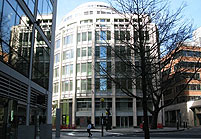
The UK Institute of Trade Mark Attorneys ITMA held its Annual Reception for members of the Bar yesterday. It was hosted in the offices of DWF in the Walkie-Talkie - that wonderful building on 20 Fenchurch Street which has a garden in the sky. We weren't in the garden, but we did get to enjoy the stunning views of the river, through glass so no photographs you have to instruct DWF.

The event was favoured by the attendance of at least two of the District Judges who "man" the small claims track of IPEC. The guide for that court gives lots of information  and most of the profession are clear that it works pretty well for photographers who find that their work has been  misappropriated. In those cases we know (I think) that damages around the £400 - £500 mark are likely to be awarded. I was not alone in commenting that the lack of any published judgements or even less formal information on how trade mark matters were dealt with gave rise to some difficulties in advising clients  whether to choose, transfer or remain there.  While many judgments are ex tempore and don't lend themselves to reporting, there are some reserved judgments that have not made it  into the public gaze because a policy decision has been made that they should not be published on BAILII. This is unfortunate because it keeps us in the dark.

One of my concerns is that with a £10,000 limit on damages  and with no intention of conducting the same type of inquiry that is conducted in the multi-track or High Court, it might be easy to assume that damages reach that limit and order it automatically. Nice for claimants, but less than satisfactory for impecunious defendants,  for whom that sum  may be unattainable.

It seems that many judgements in the small claims track are by default, which in itself is unsatisfactory and suggests that defendants are not finding access to affordable advice.  Even if you have infringed intellectual property, it is still worthwhile admitting or defending and attending to ensure that your case is dealt with fairly. So far ITMA has not been successful in setting up a pro bono scheme and intellectual property defendants are not finding much assistance elsewhere. Often the difficulty is that it's not a case of not being able to afford legal advice, it's not being able to find legal advice that is affordable.

It was great to meet the small claims track judges and hear a little about how they operate. This in itself gives me much more confidence than I had before. With the multi-track so busy, it is good to know that there is capacity on the small claims track for things to come on early. They even promise to read their emails, even if due to the universal lack of support staff that seems to handicap our  increasingly expensive court system,  its less likely that the phones will be answered.  Some difficulties seem to arise when claims are issued, which is in the Rolls Building, as it is necessary to get a small claims track number for the case to go straight to their administration.

Hopefully some  small claims track trademark decisions might find the light of day somewhere. These are public documents.  It seems odd that we should have to consider freedom of information requests in order to find out how justice is delivered. This information should be readily available to those who need recourse to intellectual property justice.  Maybe this is something that the IPO can help us with. After all, every trade mark opposition  decision is published, even though they are also non-precedental.

Friday, 1 August 2014

IPREG and its Ambitions

Rolls Building
the access door to UK patent justice
IPReg, the regulator of patent and trademark attorneys has recently published its proposed budget and  business plan for 2015. The regulated tend to think of IPReg as the maker of rules of conduct and the provider of discipline. However, its true role is quite different from that. Perhaps its primary purpose is to protect consumers, which includes micro-businesses, against the wiles of us nasty professionals. Nevertheless, we are funding it, so it is worth while understanding what we are funding them to do and whether it is in parallel, diverges from or is directly in conflict with our interests as professionals.

'Promoting and maintaining adherence to the Professional Principles' is is right at the bottom of the list of IPReg's objectives in their Plan.  One of the interesting ones higher up is 'Improving access to Justice'. I am all in favour of a improving access to justice. What I am not too sure of is whether the best way for me to do that is by paying IPReg to do research. They tell me with priority 2 they are going to commission and review research on uregulated intellectual property legal services and monitor the small claims track of the intellectual property enterprise court.

Personally, I would love to monitor the small claims track of the intellectual property enterprise court. I can do so by spending time in the Rolls Building and paying £7 to borrow the book listing claims issued for a few minutes. That's about as far as a member of the public can go. I hope IPReg have greater access.  In reality, the only way their small organisation which the chairman boasts in his 24 July letter is staffed entirely by part-timers, is to commission some external profit making organisation to do this. Universities are included even if they need the profit to maintain their over ostentatious buildings and other activities that don't result in a dividend to shareholders. Frankly how does financing research help and what can IPReg do with the evidence. We need to have a better understanding of where they are going with this and how it will impact on/benefit the regulated or the consumer.

The first limb of this research might be welcomed by the regulated profession as it may propvide detailed evidence of the competitive environment in which we live and work. Unfortunately, the huge growth in unregulated services is often to the benefit of the consumer. See for example Renewals Desk which recently attracted a lot of interest over on the IPKat blog. We can also expect more well qualified people to move away from the regulated profession simply to keep their own costs down. That chairman's letter promises us that our cost of regulation is about to go up. He says it compares favourably with that charged by other regulators such as the SRA (details of their proposed  fees for 2014-15 are here). The difficulty is that in order to provide access to justice I need to be regulated by both and the market I see is mainly for pro bono work.

Turning to the IPEC small claims track (which IPReg think is important enough to be a priority over IPEC as a whole or even the UPC which has been taking up CIPA's time at the moment), it is designed to allow trademark and copyright owners to get do it yourself justice without the need for expensive regulated advice. Since a good part of IPReg's work is regulation of patent attorneys and infringement of patents and registered designs is outside the scope of the small claims track, it is difficult to see why this minority area is a priority for IPReg. Moreover, is there a real need for consumers to have access to justice for trademark infringement?. No there is not. Only traders have trademarks. It's possible that a number of micro-businesses also guarded by the regulators are being bullied by brand owners on the small claims track and the possibility that this is doing injustice is certainly worthy of research and investigation but please not out of IPReg fees. The IPO (who already have IPEC research under way) and the Ministry of Justice are more appropriate entities to deal with such matters.

By the way there is one of those Consultation things on the IPReg budget and buiness plas so another task for ITMA and CIPA to get to grips with and we can see what CIPA did say after 18 September as they are now publishing consultation responses in one easy to find place.